Jason Terry (Freie University Berlin) and Pamina Herrmann (Freie University Berlin): Sensing the Unknown: Worlds of Knowledge and Natural Histories in England and the English Empire (17th/18th Century)
This working group brings together researchers, artists and practitioners interested in plants in Africa and wider planetary perspectives on plants to discuss methodological questions concerning plant research in the humanities and social sciences on and beyond the African continent. Mmea is the Kiswahili word for "plant." What methods are promising for studying plant epistemologies in Africa? What methods are suitable for working across disciplines, such as the natural sciences and the humanities and social sciences, but also with disciplines outside of the academy, including Indigenous knowledge systems? What are the methodological specificities of doing plant research with an emphasis on African and planetary contexts? Which methods are useful for research practices that are attentive to the practices of plant practitioners and research that is committed to social justice and climate justice? What methodological innovations come out of plant research concerning interdisciplinary and transdisciplinary approaches, as well as approaches that incorporate artistic research? What specific forms for documenting, presenting and communicating plant research evolve in these activities? The working group is concerned with plants in diverse contexts and disciplines, including but not limited to Indigenous knowledge systems, botany and plant sciences, food, medicine, horticulture, plant collecting institutions like herbaria and botanical gardens, literature, and the arts.
Conveners:
Abidemi Babatunde Babalola
Vera-Simone Schulz
Jason Terry (Freie University Berlin) and Pamina Herrmann (Freie University Berlin): Sensing the Unknown: Worlds of Knowledge and Natural Histories in England and the English Empire (17th/18th Century)
Edward Akintola Hubbard (darkmatter collective): Vegetal Intimacies
Dyoniz Kindata (DW): When Plants Make News: Circulation, Mediation, and the Colonial Struggle in Swahili Print Cultures
Justin Randolph Thompson (The Recovery Plan): Earth | Art | Space | Time: Re-Positioning The First Conference for Minority Participation in Earth Science and Mineral Engineering
Kevin Murungi (32 Degrees East) and Luca Tenreira (European University Institute): 'Bomba La Mafuta' : Textile Memory and Multi-Species Entanglements Along the East African Oil Corridor
Elia Nurvista (Yogyakarta): Plantation Tragedy
Presentation by the artist, followed by a screening of the film "Plantation Tragedy" (2026, 30 min) and a joint discussion
TBA
Mistura Allison (Villa Romana) and Helena Uambembe (Berlin): tbc
Edwin Coomasaru (University College London/University of Bristol): Plantation Desires and Abundant Aesthetics: Queer Ecologies in Lionel Wendt’s Ceylon (1950)
Romuald Tchibozo (Université d'Abomey-Calavi): Plants in Contemporary Art: The Case of Meschac Gaba in Benin POSTPONED
Tuli Mekondjo (Windhoek): Oimbodi Yedu: Herbs of the Soil
Rabiu Yusuf (Ahmadu Bello University): Dyed in Tradition and Sustainability: Unraveling the Intersection of Textile Production and Ecological Practices in Bunkure, Kano, Nigeria
Tiago Silva Alves Muniz (Universidade Federal de Goiás): The Struggle for Natural Rubber Species: Local Processes and Global Stories Moved (Around) the World
POSTPONED: new date will be announced soon
Sahar Bazzaz (College of the Holy Cross): Plants of the Red Sea Littoral: PE Botta's Expedition to Yemen, 1836
Olga Smith (Newcastle University): Ecopolitical Aesthetics of Weeds
Postponed
Louis Champion (IRD France - 232 DIADE): L'origine et la diffusion de l'hibiscus (hibiscus sabdarifa): Parcours d'une plante aux racines africaines et son impact social et culturel
[talk in French with a powerpoint presentation in English, the Q&A will be in French and English]
Bismark Asamoah (University of Ghana): Ethno-Archaeological Study of Traditional Medicine at Kodiabe, Ghana
Oleksandr Polianichev (Södertörn University): Russia's Own Tropics: Empire and Exotic Plants in the South Caucasus
Susanna Ferguson (Smith College): God’s Harmonies, Multispecies Hierarchies, and Plant Belonging in the Arab Renaissance
*NOTE SPECIAL TIME*
Franca Mboujda Meguem (University of Dschang) and Aurore Rimlinger (University of Lausanne), Sur les traces de la domestication du safoutier: Récits historiques et comparaison des formes sauvages et cultivées
[talk in French with a powerpoint presentation in English, the Q&A will be in French and English]
Guillermo Pupo Pernet (University of Arkansas): Achiote: Painting the Town Red
Maxmillian J Chuhila (University of Dar es Salaam): Green Imperialism and Biomedical Campaigns in Colonial Tanganyika
Tamara Caulkins (Central Washington University): The Power of Place: Naturalist Michel Adanson (1727-1806) au plein air in Senegal and in Greenhouses in France
(POSTPONED TO THE NEXT ACADEMIC YEAR: Sahar Bazzaz (College of the Holy Cross): Plants of the Red Sea Littoral: PE Botta's Expedition to Yemen, 1836 as well as a presentation by Neda Saeedi)
Chanelle Adams (University of Lausanne): Volatile Oils: 'Wellness', Political Power, and the Market for Ravintsara Essential Oil in Madagascar
Taiye Fasola (University of Ibadan): The Relevance of Ethnobotany for a Modern Society
Semih Celik (University of Exeter): 'A Museum in the Cradle of Civilization': The Imperial Natural History Museum in Istanbul and its Aftermath (1836-1870)
*MEETING CANCELLED: WE HOPE TO RESCHEDULE AT A LATER DATE*
Sumana Roy (Ashoka University): The Quest for the Plant Script
Elena Agudio (Villa Romana) and Marleen Boschen (Goldsmiths, University of London / Tate): Testing Grounds / Seeding Worlds: Intersections of Art and Ecology in the Garden of Villa Romana, Florence
James Wachira (University of Nairobi): NarRating Plants in Kenyan Verbal Arts
Ali Gholamifard (Lorestan University): Flagship Species of Lizards and Plants of Iran: A Measure for Indicating Biodiversity
Maura Flannery (St. John's University, NY / A.C. Moore Herbarium, University of South Carolina, Columbia): Plants That Aren't There: The Paucity of the Botanical Record for Many Parts of Africa
Mohammed Nasreldein (University of Gezira / University of Tübingen): Economic Plants and Agricultural Practices in Post-Medieval Nubia: Insights from Old Dongola, Northern Sudan
Lindsay Wells (The Getty Research Institute): From Passionflowers to Pelargoniums: South American and African Plants in Victorian Art
Janet Marion Purdy (Art Institute of Chicago, University of Chicago): Jackfruit, Jani, Teak, and Tamarind: Botanical Imagery, Wood Types, and the Significance of Wood in Carved Zanzibar Doors
*POSTPONED*
Maxmillian J Chuhila (University of Dar es Salaam): Green Imperialism and Biomedical Campaigns in Colonial Tanganyika
postponed to autumn 2022!
Melanie Boehi (University of the Witwatersrand), Phakamani m’Africa Xaba (Kirstenbosch National Botanical Garden), and Luciano Concheiro San Vicente (The National Autonomous University of Mexico): Reimagining Botanical Gardens and Urban Parks in a Time of Crisis
Anna Arabindan-Kesson (Princeton University) in conversation with Annalee Davis: Sites of Healing: Plantation Histories and Histories of Care in the Work of Annalee Davis
Cecylia Mgombele (University of Dar es Salaam), Sinyati Robinson Mark (University of Dar es Salaam) and Sarah Walshaw (Simon Fraser University): Human-Plant Relationships in Tanzania's Past: Changes, Choices, Challenges - and Specifically the Changes Brought with the Caravan Trade
Aqsa Mengal (Lahore University), Dania Nasir (Lahore University), Kulsoom Din Malik (Lahore University) and Moiz Abdul Majid (Tufts University UEP): Nature in the City: Memory, Scandal and Leisure in Lahore's Urban Parks
Sarah Longair (University of Lincoln): The Coco-de-Mer in the 19th-Century Indian Ocean World: Connections, Conservation and Colonialism
Jennifer Leetsch (Rheinische Friedrich-Wilhelms-Universität Bonn): Mary Seacole's Plant Matter(s): Vegetal Entanglements of the Black Atlantic in Wonderful Adventures of Mrs. Seacole in Many Lands (1857)
Lidia Ponce de la Vega (McGill University): The Travel Stories of Plants in the "Biodiversity Heritage Library": Colonization and (In)Visibility of the Global South in Human-Plants Relationships
West Africa Session:
Amanda Logan (Northwestern University): Archaeobotanical Evidence of Food and Crafting from Oduduwa College, Ile-Ife, Nigeria
Chioma Ngonadi (University of Nigeria, Nsukka/University of Cambridge): Ancient Food Practices and Pottery Production in Southeastern Nigeria
Orijemie Emuobosa Akpo (University of Ibadan): From the Hills to the Valley: Changing Food Production Practices among the Tiv in Central Nigeria
Elaine Ayers (New York University): Packed in Moss: Bryology and the Circulation of Plants in Nineteenth-Century Colonial Natural History
Jonathan Robins (Michigan Technological University): Misreading Africa’s Oil Palm Landscapes: Colonial Legacies in Agriculture, Ecology, and Agroforestry
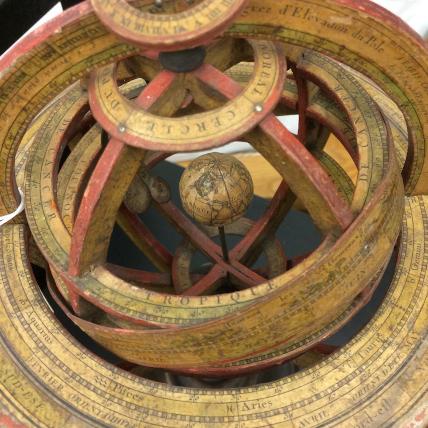
Geocentric armillary sphere, an astronomical tool that functions as a spherical astrolabe, featured in our collection of historical medical and scientific instruments.
© 2026 Consortium for History of Science, Technology and Medicine | Copyright Infringement