TBA
What happens when scientists and clinicians “turn on”? Can laboratory cultures be sites of countercultural innovation, or vice versa? Are principal investigators self-experimenting? How do scientific and medical practices reflect broader cultural influences? The “Psychedelic Cultures, Laboratory Cultures” working group explores the cultural histories of psychedelic science and medicine across laboratory, clinical, countercultural, and indigenous contexts. Running alongside the new humanities journal Psychedelic Cultures, the group examines how the cultural lives of psychedelic plants, fungi, and chemicals have shaped–and been shaped by–scientific, medical, and broader social worlds. Designed as a collegial forum for interdisciplinary exchange, the group provides space for discussing works-in-progress, engaging relevant scholarship and media, and workshopping potential journal submissions. This group offers a dedicated venue for examining the distinctive laboratory cultures and wider cultural networks surrounding psychedelics.
Upcoming Meetings
Monday, November 9, 2026, 8:00 - 9:30 pm EST
Monday, December 14, 2026, 8:00 - 9:30 pm EST
TBA
Monday, January 11, 2027, 8:00 - 9:30 pm EST
TBA
Monday, February 8, 2027, 8:00 - 9:30 pm EST
TBA
Monday, March 8, 2027, 8:00 - 9:30 pm EST
TBA
Monday, April 12, 2027, 8:00 - 9:30 pm EDT
TBA
Monday, May 10, 2027, 8:00 - 9:30 pm EDT
TBA
Past Meetings
-
Lightning sessions -- 3-10 minutes on your current research. End your remarks with a question you are wrestling with!
Henrique Antunes
Alan Sumler
Paul Gillis-Smith - the patient/prophet
Laura Appleman - psychedelic wellness grifters
Kevin Whitesides - Psychedelic Cultures journal
-
Introductory session:
a) Meet the conveners and the participants
b) Discuss the working group's orientation to the launch of a new journal, Psychedelic Cultures
c) Discuss plan for the year
Group Conveners
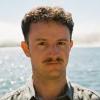
Paul Gillis-Smith
Paul Gillis-Smith is an historian, focusing primarily on the history of drug-assisted therapy.

Amadeus Harte
PhD in medical / psychological anthropology at Princeton. Researching the sociocultural matrix of psychedelic clinical trials for depression.
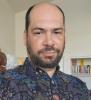
Kevin Whitesides
Kevin Whitesides is an interdisciplinary scholar of religion whose research examines cultural innovation, social change, and the circulation of dissenting ideas across scientific, popular, and alternative knowledge networks. He holds a BA from Humboldt State University, an MSc from the University of Edinburgh, and a PhD in Religious Studies from the University of California, Santa Barbara.
He is the founding co-editor of Psychedelic Cultures (with Paul Gillis-Smith; forthcoming), serves as Editorial Assistant for Religion (2020–present), and served as Features Editor for The Religious Studies Project (2011–2015). He is the founder and archivist of the Terence McKenna Archives (2010–present), a substantial collection of primary-source materials documenting psychedelic cultural history.
His doctoral research developed a framework for describing, explaining, and mapping the emergence, circulation, and remixing of counter-authority tropes and strategies across overlapping counterpublics. Of particular relevance to the Consortium and the Psychedelic Cultures,Laboratory Cultures working group, for which he serves as a co-convener, is his work on the transmission of ideas between scientific, popular, and alternative discourses.
His research has addressed topics including New Age spirituality, psychedelic culture, alternative archaeology, conspiracism, hip hop, Indigenous studies, neo-Mayan spirituality, and Latter-day Saint traditions. His work combines historical inquiry, comparative theory, digital humanities, cognitive science, and multidisciplinary models of communication to better understand processes of cultural transmission. Methodologically eclectic, he favors a "toolkit" approach that draws upon whatever theories and methods prove most illuminating for the problem at hand.
29 Members
You must be a member to view resources. Login or create an account
Image
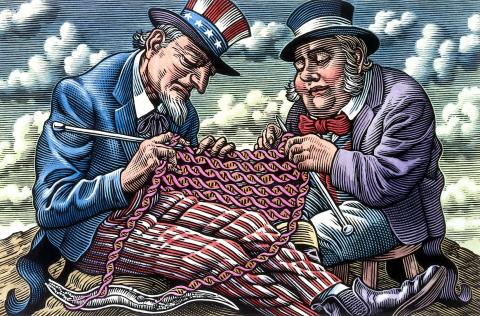
Anglo-American research on the human genome, represented by Uncle Sam and John Bull knitting DNA. Scraperboard drawing by Bill Sanderson, 1990.