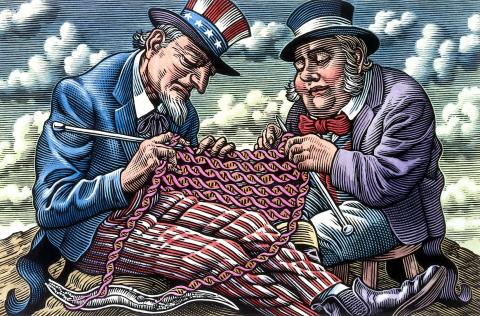
Science Studies and the Long Eighteenth Century is an interdisciplinary working group designed to bring together scholars interested in the study of science, defined broadly, across the early modern and long eighteenth-century world. The group is open to participants from a wide range of fields and organizations, including literature, history, art history, and the history of science.
 

The working group creates a collaborative space for sustained intellectual exchange beyond the conference panel. It features works-in-progress, book launches, and focused reading sessions built around pre-circulated texts, fostering conversation across disciplines and career stages. By emphasizing dialogue and experimentation, the group aims to support new research while strengthening connections among scholars working on related questions from different perspectives.
 

Centered on the long eighteenth century as a shared frame, the group highlights the circulation of knowledge, the interplay of science with literary and visual cultures, and the global and material dimensions of science, technology and medicine. At the same time, it remains flexible and responsive to emerging topics and participant interests.
 

This working group seeks both to convene existing networks and also to build new ones. It offers an inclusive, interdisciplinary forum for advancing the study of science in the long eighteenth century and for cultivating ongoing scholarly collaboration.


Group Conveners

acoppola

Al Coppola

Al Coppola is an Associate Professor of English at John Jay College of the City University of New York.  His research explores the innovations of the 18th century that structure the 21st century modernity, with a special interest in the roles that science, spectacle, and quantification have and continue to play in what makes us modern.  His first book, The Theater of Experiment: Staging Natural Philosophy in Eighteenth-Century Britain, was published by Oxford University Press in 2016.  A critical study of science in performance and science as performance in the Enlightenment, the book analyzes both the role of spectacle in the creation and verification of natural facts and the ways in which science was itself performed in both domestic and theatrical spaces. Professor Coppola is currently at work on a new book project, Enlightenment Visibilities, which analyzes a range of strategies, first innovated in the long eighteenth century, for by bringing previously unimaginable or imperceptible phenomena into the domain of perception and knowledge Professor Coppola is the past chair of the Columbia University Seminar in Eighteenth-Century European Culture, which he led from 2010 to 2016.  A co-founder of the Science Studies Caucus of the American Society of Eighteenth-Century Studies, he also sits on the editorial board of Restoration and Eighteenth-Century Theater Research.


Kristin Girten

Kristin Girten is Professor of English at the University of Nebraska Omaha and currently a Visiting Scholar at the Brown Center for Advanced Study. She is the author of Sensitive Witnesses: Feminist Materialism in the British Enlightenment and co-editor (with Aaron Hanlon) of British Literature and Technology, 1600-1830. She is currently working on a monograph that conducts a comparative analysis of Phillis Wheatley’s and William Blake’s abolitionist poetics. She is also preparing an edited collection, with Katie Sagal and Aaron Hanlon, on “Naming and Classifying in the Long Eighteenth Century.” She has published essays on Margaret Cavendish, Jonathan Swift, Charlotte Smith, Eliza Haywood, Ann Radcliffe, and Jeff VanderMeer.


Anita Guerrini

Anita Guerrini is Horning Professor in the Humanities emerita at Oregon State University.  Her research interests include early modern anatomy and natural history, and historical ecology.


Emily West

I am an assistant professor in the Department of English at the University of Hawai'i at Mānoa. My work examines the connections between literature, the body, and the material world across the long eighteenth century, bringing together fields including gender and sexuality studies, the history of science and technology, disability studies, and the history of childhood. My book, Rewriting the Mechanic: Text, Technology, and the Body in the Eighteenth Century (Bucknell, 2026), argues that literary methods crafted new understandings of technological power and possibility in eighteenth-century England. My work has appeared in The Journal for Early Modern Cultural Studies, Eighteenth-Century Fiction, and The Eighteenth Century: Theory and Interpretation.


5 Members

You must be a member to view resources. Login or create an account