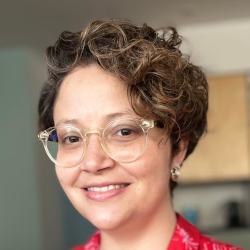
Nathalia Candido Stutz Gomes is a PhD. Candidate at the Institute of International Relations, University of São Paulo, and a 2025-2026 Consortium Research Fellow.
My research investigates the transnational impacts of Brazilian public health techniques within transnational knowledge networks during the Cold War, particularly between 1955 and 1978. It does so by focusing on a key World Health Organization (WHO) milestone program: the Malaria Eradication Program (MEP), launched in 1955. The study explores how local non-state actors from the so-called “Third World” influenced debates within the WHO and helped shape health policies during this period. I intend to do so by examining the case study of a prophylactic malaria control method developed by Brazilian malariologist Mario Pinotti, a former Rockefeller Foundation grantee and a prominent figure in Brazilian health administration during the 1940s and 1950s. Before serving as Minister of Health for several presidencies, Pinotti worked in various capacities on government initiatives addressing rural endemic diseases, especially malaria.
Throughout the 1950s and the 1960s, disease eradication programs had become central to WHO. These programs aimed at the complete elimination of disease, an enterprise that reflected the widespread optimism about the technological advancements of the time, which encouraged the belief that eradicating a disease was technically feasible. In the case of the Malaria Eradication Program, the strategy was to conduct extensive spraying of the residual insecticide DDT, then considered a major technological advancement, in households in affected areas of the developing world to target the mosquitoes that transmitted the disease. With the disease vector temporarily gone, public authorities would then locate and treat all infected people, thereby interrupting transmission before the expected return of the mosquito.
Pinotti devised a prophylactic method to control malaria in regions where DDT spraying was unfeasible, such as the Amazonian hinterlands, by incorporating the antimalarial drug chloroquine into cooking salt and distributing it to populations in malaria-endemic areas. His method was tested in Brazil in the early 1950s and subsequently integrated into WHO’s MEP in 1958. Pilot projects took place in Cambodia (1958-1961), the Netherlands New Guinea (1959-1960), Uganda (1964-1965), Ghana (1961-1962), and Tanganyka (1962-1964). Continued use occurred in French Guiana (1967–1971), Guyana (1961–1965), and Suriname (1966–1972).
Literature has examined how the WHO’s MEP reflected the Cold War’s influence on the field of international health. Between the 1950s and the mid-1960s, Cold War rivalry shaped two opposing health perspectives within WHO: the U.S.-favored “technical-biomedical” approach and the USSR-supported “'social medical” model. The former emphasized technological solutions and top-down disease eradication programs, while the latter stressed the importance of socioeconomic factors in public health efforts, even though it did not dismiss the need to eliminate diseases. Throughout the 1950s and the early 1960s, the Malaria Eradication Program was the showcase of the U.S. “technocratic” perspective on international health, intertwining U.S. anti-communist policies with development ideologies. This program remains the largest disease eradication enterprise to date.
However, these perspectives were not absolute; they often overlapped, each with its own nuances. Acknowledging these complexities opens new avenues for critical studies in the history of international health, highlighting the contested, polycentric nature of public health, shaped by diverse actors (including the sick) and local processes. As I delve into this research, I view these international public health projects not as a simple “diffusion” of ideas and techniques from supposedly “superior” technicians in the global North. Instead, I treat these experiences as products of global circulation that affect all parties involved. This means that even in a “top-down” experience such as the Malaria Eradication Program, complex processes of reception, collaboration, negotiation, and adaptation occur, reconfiguring knowledge in cross-cultural contexts. This approach acknowledges the agency of Global South actors while also addressing the power asymmetries inherent in the history of science.
Pinotti’s method was created and applied at the intersection of the principles underlying disease eradication strategies, such as a top-down, technical-biomedical approach, and the initiative of a local actor from the “Third World." This local expert's knowledge enabled them to test and tailor the program to fit specific local circumstances.
Through the Consortium Research Grant, I visited three archival repositories in the United States: the Rockefeller Foundation Archives, the National Library of Medicine, and Harvard Countway Medical Library. My field research at Consortium member institutions examined the core values and concepts behind the Malaria Eradication Program, including malaria research during that period—covering technical feasibility, challenges, and administrative setbacks in implementation. It also explored the perspectives of foreign policymakers and technicians regarding the program more generally, with a particular focus on Brazilian malaria policy. These materials are key to understanding transnational knowledge circulation among proponents and practitioners of malaria eradication programs and to investigating some of the challenges faced in implementing these initiatives on the ground. These documents have also highlighted the decisive U.S. involvement and sponsorship in malaria eradication programs. Finally, some of these archives also contained materials and references to Pinotti’s method experiments and pilot projects.
The Rockefeller Foundation (RF) archives were crucial for exploring the negotiations involved in establishing a Malaria Eradication Program in Brazil according to WHO’s terms, and for assessing the perceptions of the RF’s officials towards the Brazilian program. These are crucial aspects to understand the broader context underlying the establishment of the Brazilian Malaria Eradication Program, in which “Pinotti’s method” was being developed and implemented. The Rockefeller Foundation’s archives are particularly interesting because of the history of the Foundation’s activities in Brazil and the resulting close ties between RF’s officials and Brazilian public health technicians and policymakers. The RF had been implementing disease control programs in Latin America since the 1920s. Between 1927 and 1942, Fred L. Soper, was the Regional Director of RF’s International Health Division in Brazil and, alongside Brazilian authorities, led initiatives of research and control against malaria and yellow fever. Soper, a key proponent of the malaria eradication program, later served as director of the Pan American Health Organization from 1947 to 1959.
Examining RF archives from negotiations before Brazil formally adopted WHO’s malaria eradication program revealed that RF and PAHO not only had similar ideas about disease eradication but also agreed on certain administrative methods for implementing the program. These documents showed that, as PASB director, Soper used his close contacts with RF officials to persuade the Foundation to assist and engage with WHO’s worldwide malaria eradication efforts. Soper mobilized RF officials, U.S. officials, and Brazilian authorities to negotiate establishing a malaria eradication program in Brazil, even though the country’s authorities focused on control rather than eradication. These documents reinforce how RF remained influential in international health issues despite formally disengaging from disease eradication initiatives after the establishment of the WHO in 1948. They specifically show how this influence played out in Brazil-related negotiations. Although the RF decided not to get involved in the Brazilian eradication program, RF officials in the country were engaged in critical negotiations with Brazilian policymakers and worked with Soper to prepare the material that became the malaria eradication proposal presented to the Brazilian President Juscelino Kubitschek. Soper, with decisive support from the RF representative in Brazil, Robert Briggs Watson, negotiated and insisted that Brazilian authorities create an autonomous malaria service to implement the program on the ground. It took some time, but the Brazilian government established the Malaria Control and Eradication Group in 1958, led by Mario Pinotti.
At the National Library of Medicine, I concentrated on the collections of Fred L. Soper and Eugene P. Campbell. Campbell was chief of the Institute of Interamerican Affairs (IIAA) in Brazil from 1945 to 1955, then served as Chief of the International Cooperation Administration’s Office of Public Health in Washington D.C. before returning to Brazil in 1965 as a USAID consultant. In these files, I analyzed malaria research reports and drafts from 1954 to 1968. These documents reflect how the research agenda on malaria evolved during that period. These materials were critical for situating “Pinotti’s method” within the malaria research agenda of the time. In addition to scholarly discussions, these files also contained documents that reflected the “spirit” of the disease-eradication approach, described the history of antimalaria policies, and the challenges of the WHO’s program. These papers show how these experts were optimistic about the prospects of eradicating malaria, despite the administrative difficulties involved in organizing an eradication operation. It was also interesting to note that some of these articles contain a soupçon of racism as they link malarial regions to ideas of “poverty and ignorance”.
Among these documents, I also accessed several reports issued by the United States International Development Advisory Board (IDAB) Special Committee on Malaria Eradication. The IDAB was established by U.S. President Harry S. Truman to analyze development initiatives in the context of the Point Four Program, the “U.S. bold new program” to provide aid and technical assistance to foster development in the so-called “Third World” in the early years of the Cold War. Through this series of confidential IDAB reports, I gained a deeper understanding of the “spirit of malaria eradication” as seen by the program’s main sponsor, the United States. In a 1956 report, for instance, the Committee assessed U.S. support for malaria eradication as an important countermeasure against Russian moves in Asia and the Middle East. These documents reinforce the view that the U.S.'s decisive sponsorship of WHO's malaria eradication approach reflected the Cold War-era dispute between two opposing models of society and modernization, namely U.S. liberal capitalism and Soviet communism. Indeed, IDAB’s documents and a series of other reports highlight how these organizations viewed malaria as a deterrent to economic development. This perspective is also present in official WHO documents. For them, the economic benefits of eradicating malaria were clear: it would increase agricultural and industrial productivity and provide healthier workers for public works.
Finally, I visited the Harvard Countway Medical Library, where I reviewed documents from the American Society of Tropical Medicine and Hygiene (ASTMH). The ASTMH strongly supported the malaria eradication approach. By analyzing these materials, I confirmed the close connections between Rockefeller Foundation officials, the ASTMH, USAID and U.S. Public Health Service (PHS) officials. ASTMH records show that this network of pro-eradication experts met frequently and discussed the prospects of the malaria eradication program. Throughout these records, I found correspondence, reports, and meeting memoranda of the Malaria Program Management Committee, which was established in 1963 to examine USAID operations and determine ways to achieve more effective management in the worldwide malaria eradication program. These documents offer insight into the administrative challenges of USAID bilateral malaria eradication programs and how these discussions led to an agreement in 1966 to transfer the administration of U.S. bilateral Malaria Eradication Programs to PHS, specifically the Centers for Disease Control (CDC). These materials are particularly interesting for my research, not only because experts from these organizations discussed the challenges of achieving malaria eradication, but also because they offer insight into the disagreements among them.
Primary sources on “Pinotti’s method” are scarce, as is often the case with historically marginalized actors, such as non-State actors from the so-called “Third World.” Consequently, I must rely on evidence and fragments of information scattered across various collections, often in the archives of foreign counterparts with whom these actors interacted. It has been particularly difficult to find evidence of local reactions among people directly affected by these projects. However, thanks to the Consortium Research Fellowship , I was able to pursue multi-archival research in the United States and consult valuable materials that indirectly address these issues. These documents also show the transnational reach of Pinotti’s methods among high-level experts, who frequently cited the then-ongoing medicated salt pilot projects in their research articles. Finally, at Consortium member institutions, I consulted materials that provided critical information on the conceptual ideas and practices underlying the malaria eradication program, the evolving discussions on methods for controlling and eradicating the disease in that context, and the negotiations and perspectives of foreign experts and policymakers on the Brazilian malaria eradication program. This context is critical for situating “Pinotti’s method” within the transnational networks of expertise; these materials will be the backbone of several chapters of my dissertation.