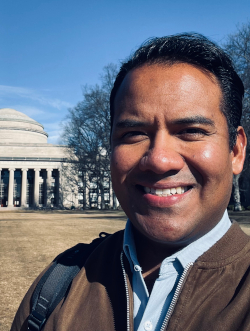
José Alberto Nochebuena is a Postdoctoral Fellow at the National Autonomous University of Mexico and a 2025-2026 Consortium Research Fellow.
From Revolution to Erdbaumechanik
Urban hydrological processes in cities of the Global South such as Mexico City are frequently explained through the lens of capitalist domination: a framework that attributes the megalopolitan growth of Mexico City throughout the twentieth century, and the hydroecological transformation of the Valley of Mexico, to the capitalist system itself, which allegedly mobilized large-scale hydraulic infrastructure as an instrument for urban land valorization and profit reproduction. Among the most emblematic of these projects is the so-called Sistema de Drenaje Profundo (Deep Drainage System), a network of flood control tunnels approximately 23 feet in diameter, spanning an initial length of 42 miles, and reaching depths of up to 820 feet constructed between 1967 and 1975 to carry storm water from the Valley of Mexico to the neighboring state of Hidalgo. Yet this critical framework suffers from significant gaps in knowledge and serious historical distortions. Most notably, it overlooks a fundamental point: the crucial trigger of urban growth over the former lake bed of Lake Texcoco was not the capitalist system, but the Mexican Revolution, which profoundly disrupted demographic patterns across the country, triggering a massive exodus toward Mexico City and giving rise to a heavily bureaucratized, centralized, and corporatist state. The most serious gap in Marxist and political ecology analyses of tunneling in Mexico City, however, lies in their instrumentalist conception of science and technology — one in which scientists, engineers, and technical experts, along with the body of knowledge that made tunneling possible, are reduced to mere subordinates of the capitalist system: "structural supports" of the economic order.
In my monograph, tentatively titled Governing from Below: Tunneling and the Making of Modern Mexico City, I reject any instrumentalist conception of science and technology and instead treat them as vigorous sources of political power, capable of eroding the dominance of traditional power structures in postrevolutionary Mexico—structures rooted not in ownership of the means of production, in any straightforward Marxist sense, but in revolutionary military credentials and in the legal-bureaucratic cohort that took control of the Institutional Revolutionary Party (PRI) in the 1940s. In the manuscript, I argue that the science and technology underlying tunneling managed to undermine the power of military figures who resisted relinquishing their control over hydraulic policy in the Valley of Mexico. These actors drew on the critique of the "drainage paradigm" and indigenist nationalism to oppose tunneling and consolidate political legitimacy. They were joined by bureaucrats who had turned Mexico City into a paradise for political machines, and who viewed tunneling as a threat to their patronage programs given its considerable costs. The triumph of tunneling and by extension, of science and technology over both the revolutionary military establishment and the bureaucratic apparatus was so decisive that it gave rise to a technological regime operating in parallel with the political regime and the economic system, expanding uninterruptedly from 1967 through the recent inauguration of the Túnel Emisor Oriente (TEO; Eastern Outfall Tunnel) and the commencement of construction on the Colector Solidaridad. Regardless of transformations in state form, from interventionist to neoliberal to post-neoliberal, changes in governing parties, and shifts in the economic system, tunneling has firmly established itself as the primary technology through which a megalopolis of more than twenty million inhabitants manages flood prevention.
Consortium Collections
During my tenure as a Research Fellow at the Consortium, I focused on identifying the science behind tunneling in Mexico City: its origins during the First World War, its migration across institutions and national borders, and its rise to power in Mexico. Whereas critical perspectives have explained tunneling in Mexico City as a mere tool for reproducing profit, the archival sources revealed a completely different story. They showed me that the intellectual foundation of tunneling was not simply hydraulic engineering, state planning, or capitalist urbanization, but Karl von Terzaghi’s Erdbaumechanik (soil mechanics) and the remarkable transnational network of laboratories, instruments, teachers, and Latin American disciples through which that science traveled to Mexico.
This is precisely why the Consortium’s collections proved decisive. The archives I consulted at Harvard, MIT, and the Rockefeller Archive Center did not merely supplement a Mexican story with foreign context; they contained the institutional history of the science itself. Soil mechanics developed in Cambridge through laboratories, apparatuses, teaching programs, and personal networks that connected figures such as Terzaghi, Casagrande, Gilboy, Westergaard, Fair, and their Latin American students. It was in these spaces that Mexican and Latin American engineers encountered, learned, and translated soil mechanics before carrying it back to Mexico City, where it became a powerful language for understanding subsidence, foundations, hydraulic works, and eventually tunneling. The Consortium therefore allowed me to move beyond the methodological localism that so often characterizes Mexican scholarship on Mexico. It enabled me to reopen the case in the fall of 2025 and reconstruct the emergence, development, expansion, and migration to Mexico of geotechnical engineering as a transnational history of science and political power.
My first stop was the Harvard University Archives, where I consulted the Harold M. Westergaard Papers, the Arthur Casagrande Papers, and the Gordon M. Fair Papers. These collections illuminated the maturation of soil mechanics during the 1940s and 1950s, Casagrande's work at the Harvard Soil Mechanics Laboratory, and the training of his Latin American disciples — engineers trained under the leading figures in soil mechanics and allied disciplines, forging relationships that would last for decades and, in several cases, until the end of their lives. The intellectual core of these relationships was the advancement of knowledge in soil mechanics and its application to engineering projects. What I found particularly striking was the realization that this strategic body of knowledge, along with its laboratory infrastructure, traveled to mid-twentieth-century Mexico City through the very Latin American disciples trained at Cambridge, among them Nabor Carrillo, a former rector of National Autonomous University of Mexico (UNAM). It was this intellectual migration that enabled the emergence of tunneling and secured its preeminence over hydraulic policy in the Valley of Mexico.
I then visited the MIT Distinctive Collections, a particularly rich resource given that MIT served as a central hub for soil mechanics following Karl von Terzaghi's arrival from Istanbul in the fall of 1925. Among the collections consulted were the Harold A. Fidler Papers, the papers of MIT President Stratton, and the John R. Freeman Papers. Together, these materials offered a firsthand account of soil mechanics' development in Cambridge: the urgent need for it given that MIT's iconic Dome was experiencing worrisome settlements; the initial resistance to Terzaghi; the remarkable cycle of innovation in instrumentation for analyzing settlements and landslides during the 1920s and 1940s; and the rapid growth of soil mechanics in the United States, driven by the young engineers whom Terzaghi had trained at MIT — above all Arthur Casagrande and Glennon Gilboy — who extended their mentor's science and helped turn it into an international discipline equipped with modern instruments still in use today. Within a span of only eleven years — between 1925 and 1936, when the First International Conference on Soil Mechanics was held — soil mechanics had acquired a shared technical language. Notably, among the national committees represented at that conference, only one belonged to a country of the Global South: Mexico, led by Engineer José Antonio Cuevas, who established the connection between Mexico City's subsidence and soil mechanics from the very moment the discipline entered the international arena. Terzaghi founded MIT's first soil mechanics laboratories with a total investment of fifty thousand dollars (roughly equivalent to one million dollars today) and established the Institute's legendary Division of Soil Mechanics.
At the Rockefeller Archive Center, I examined both the Nelson A. Rockefeller Personal Papers and the records of the International Health Division of the Rockefeller Foundation. These proved to be essential resources for understanding the migration to Mexico City of a discipline closely allied with soil mechanics: sanitary engineering. My principal finding was that the hygiene movement — and fields such as sanitary engineering — never constituted the dominant body of knowledge in Mexico City, but rather a complementary one. Mexico City is not so much a "sanitary" city as it is a "geotechnical" city. That said, the alliance between soil mechanics and sanitary engineering was consequential. While sanitary engineering had made its way to Mexico in the 1920s through Rockefeller Foundation programs, it experienced a second wave of influence during World War II, driven in part by figures such as Nelson A. Rockefeller, who leveraged Pan-Americanism as a geopolitical tool to counter the military regime of Argentina — led by General Farrell and Juan Domingo Perón, who had seized power through a coup and maintained sympathies with the Nazi regime. Rockefeller found a valuable ally in Mexico; within this geopolitical context, Mexico trained an entire generation of sanitary engineers at Harvard, funded by Rockefeller Foundation fellowships. The Rockefeller Foundation's sanitary engineering archives also revealed that the discipline is far more sophisticated than its contemporary caricature suggests. Today it is frequently dismissed as a field concerned merely with pipes, whereas in reality it draws on civil and hydraulic engineering, chemistry, biology, parasitology, bacteriology, and other fields, constituting a complex branch of engineering that has been, perhaps alarmingly, set aside in recent decades.
Outcomes
The Consortium fellowship served as a genuine catalyst for reopening my case from an international perspective and completing my book manuscript. Beyond that, it led me toward grounding a powerful thesis: contemporary cities like Mexico City are not simply products of capital or of the state, but of science and technology: forces far from being mere "instruments," and instead constituting sources of political power that challenge traditional political structures and can give rise to technological regimes as significant as, or even more significant than, political regimes or economic structures. The contemporary city is not merely a "capitalist" or "neoliberal" city, it is also a technological one.
Mexico City in its contemporary form cannot be understood without Karl von Terzaghi's Erdbaumechanik. Thanks to the support of the Consortium, I have been able to examine the history of soil mechanics in depth, completing during the academic year a book manuscript tentatively titled Governing from Below: Tunneling and the Making of Modern Mexico City, as well as a paper tentatively titled "Sixty Years Underground," which I am preparing to submit. None of this would have been possible without the Consortium's support, the Fellows Seminar, the Engineering Studies Group seminar, and the outstanding assistance of the archivists at Harvard, MIT, and the Rockefeller Archive Center. I am deeply grateful to the Consortium.