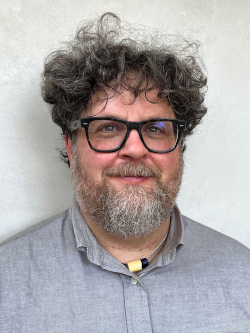
 Robert L. A. Hancock is an Associate Professor in the Department of Anthropology and the Associate Director Academic in the Office of Indigenous Academic and Community Engagement at the University of Victoria, British Columbia, Canada, and a 2024-2025 Consortium Research Fellow.
Over the past three decades, Native American and Indigenous Studies (NAIS) has emerged as an international discipline, with an emphasis on critical analyses of Indigenous experiences on a global scale. One of the antecedents of NAIS is an approach known variously as American Indian Studies (AIS) or Native American Studies that had its roots in the United States in the 1960s and 1970s. There is a growing body of research examining the growth and development of the discipline in North America over the past six decades, largely focused on its origins in literary and historical studies.
Overlooked in these existing accounts of the discipline’s history is the role that a group of Indigenous scholars trained as anthropologists played in the development of AIS. These included D’Arcy McNickle (Métis / Salish Kootenai, 1904–1977), Edward Dozier (Pueblo, 1916–1971), Beatrice Medicine (Lakota, 1923–2005), Robert K. Thomas (Cherokee, 1925–1991), and Alfonso Ortiz (Tewa, 1939–1997). Each of these anthropologists had longstanding relationships with the University of Chicago anthropologist Sol Tax (1907–1995), and their work aligned in significant ways with his Action Anthropology orientation, which focused on community-engaged research that centers on self-determination and non-assimilation of Indigenous people, communities, and nations. They also had extensive, ongoing conversations and collaborations, both individual and collective, with the legal scholar and theologian Vine Deloria, Jr. (Lakota, 1933–2005).
My fundamental premise is that the history of the formation of AIS is intrinsically connected to the history of American anthropology in the 1960s and 1970s, in three key ways: 1) in an interpersonal sense, as the product of a series of overlapping networks of anthropologists and other scholars engaged in dialogue with anthropology; 2) in an institutional sense, as a function of projects to create departments and programs in universities and colleges and emerging from engagement with foundations in search of funding support; and 3) in an intellectual sense, especially as reflected in the conversations around the areas and topics relevant to the nascent field and its curriculum, the role of researchers and their relationships with Indigenous communities, and the theoretical apparatus developed to understand and support the aspirations and goals of Indigenous people and nations guided by an Action Anthropology orientation.
My research focuses on several specific examples and cases exploring these connections from the mid-1950s to the late 1980s. These include the Workshop on American Indian Affairs, the American Indian Chicago Conference, the First Convocation of American Indian Scholars and other educational gatherings, the Smithsonian Handbook of North American Indians, the Center for American Indian History (later renamed in honour of D’Arcy McNickle) at the Newberry Library, and the founding of academic departments (particularly American Indian Studies at the University of Arizona).
In starting this research, I soon realized that the existing historiography of mid-20th century anthropology is not well-suited to support the kinds of questions I am asking and analyses I am seeking to undertake. I realized that it would be essential to engage with perspectives from scholars working in the history of science, specifically those with a focus on the history of the social sciences after the Second World War. Works in this area are especially strong in examining and explaining the roles and impacts of foundations and private funding, the histories and development of institutions, and the wider political contexts and themes of this period.
Support from the Consortium enabled me to begin to explore these topics in a wide range of collections. By the time I received the Research Fellowship funding, I had already undertaken work in the Sol Tax Papers (in the Special Collections Research Center at University of Chicago Libraries), the Beatrice Medicine Papers (in the National Anthropological Archives of the Smithsonian Institution), and the D’Arcy McNickle Papers (in the Modern Manuscripts and Archives Repository at the Newberry Library). The Consortium fellowship allowed me to undertake research in the Alfonso Ortiz Papers (in the Manuscripts Division, Department of Special Collections, Princeton University Library) and in the Dell Hymes Papers (in the Library of the American Philosophical Society). As part of the process of reviewing my fellowship application, representatives from two institutions identified further relevant materials, in the Smithsonian Handbook of North American Indians records (in the National Anthropological Archives) and the Social Sciences Research Council files (at the Rockefeller Archive Center), that I had not previously known about; I am particularly grateful for the unexpected introduction to these materials.
While I still have a significant amount of work to do on this project, including return visits to some of the collections I have been using, the Consortium fellowship has allowed me to confirm that there are enough materials to develop my arguments and analyses. Having gone into these initial archival explorations with what I thought was a relatively focused and reasonably-sized project, I have found that it has grown and shifted in unexpected and extremely productive ways.