Jingwen Li is a PhD Candidate in History of Science, Princeton University, and a 2024-2025 Consortium Research Fellow.
Doctors and patients do not see – or speak – in the same way. The limits of clinical communication have long defined the limits of medical care and justice. My dissertation examines how doctors and patients communicated across clinics in China and the United States from the nineteenth to the early twentieth century. I argue that the rise of modern medicine was driven not only by advances in medical theory, therapeutic innovation, or imperial power, but also by the creation of new media and practices for communicating embodied experience. In this report, I will first introduce my dissertation project, then discuss its methodological innovations, and finally explain how Consortium member collections (both digitized and non-digitized) have made this work possible.
Attending to the problem of clinical communication significantly reshapes our understanding of the modern history of medicine. Histories of Western medicine in Asia often begin with missionary physicians establishing ophthalmic clinics and attracting patients through dramatic “ocular demonstrations,” such as restoring sight to the blind. These encounters have typically been interpreted either as evidence of Western medicine’s superiority or as manifestations of imperial power. What is often overlooked, however, is how difficult it was to communicate with patients in a foreign country about something as elusive and subjective as visual experience. My dissertation demonstrates that visual impairment such as “blurriness” and “blindness” posed both profound challenges and unique opportunities for clinical communication in the nineteenth and early twentieth centuries.
The dissertation follows a diverse array of practitioners of eye medicine – from itinerant healers, missionary physicians to drug vendors and optometrists – across the pacific from the 1830s to the 1930s, a period during which medicine was becoming increasingly professionalized and institutionalized in both China and the United States. Working across linguistic, cultural and epistemic divides, these practitioners negotiated – and often clashed – with patients in making deeply personal sensory experiences legible, credible, and therapeutically actionable. I explain what made Western medicine persuasive to Chinese patients through an examination of these communicative practices that underpinned diagnosis, treatment, and medical authority.
The central challenge of this project is methodological: how to study the communication of experience historically. How can we recover everyday clinical encounters and liminal sensory conditions that were often considered too ordinary to leave substantial archival traces? The project therefore requires new approaches to archival research. Rather than focusing on a particular physician, institution, or disease, I examine the media and practices through which experience was communicated across a wide range of clinical settings. The Consortium collections enabled this new approach in two important ways.
First, the global scope of the collections helped me to contextualize, connect, and compare individual case studies. While abundant research has been done on Western medicine in China, fewer studies have systematically juxtaposed Western medicine in China, indigenous Chinese medicine, and contemporary medical practice in the West. The Consortium collections of hospital records from institutions across Britain, the United States, and China, have made it possible for me to observe what happened when clinical encounters moved across space.
In particular, materials from the Wellcome Collection (digitized), the College of Physicians of Philadelphia, and the Yale Medical Library enabled me to reconstruct the expanding global network of eye hospitals in the early nineteenth century – from London (The Dispensary for Curing Diseases of the Eye and Ear, 1805), Liverpool (The Liverpool Ophthalmic Infirmary, 1820), New York (The New York Eye Infirmary, 1820), and Philadelphia (Wills Eye Hospital, 1832), to colonial Calcutta (The Branch Eye Infirmary, 1820s) and missionary outposts in Canton (The Canton Hospital, 1835). Tracing this transnational network has been crucial for understanding how Western medicine was transformed as it moved into non-Western contexts.
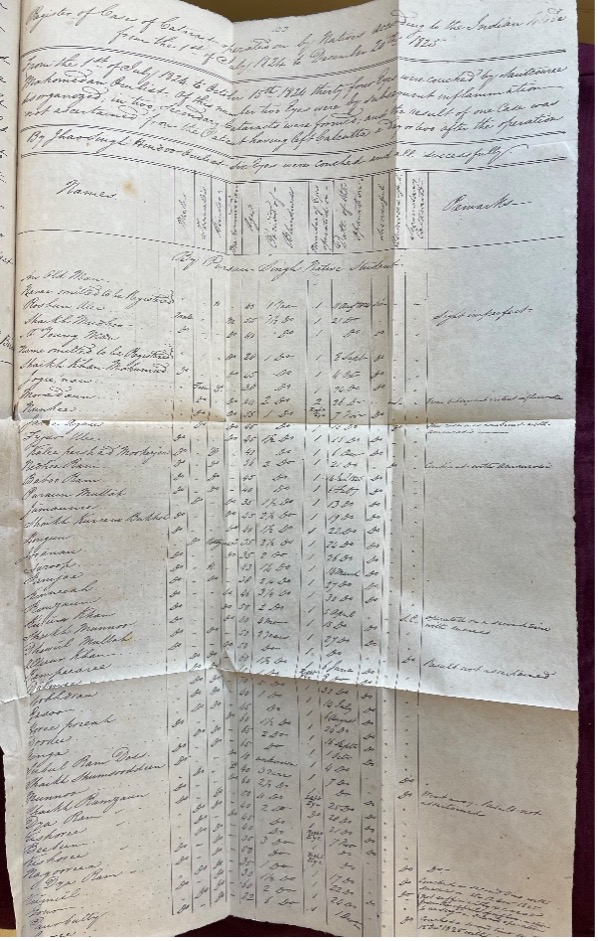
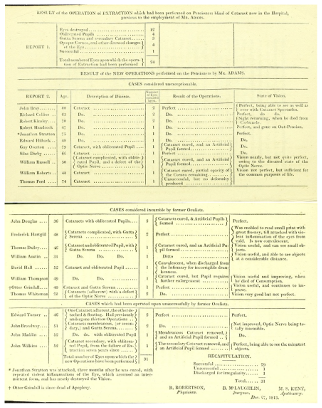
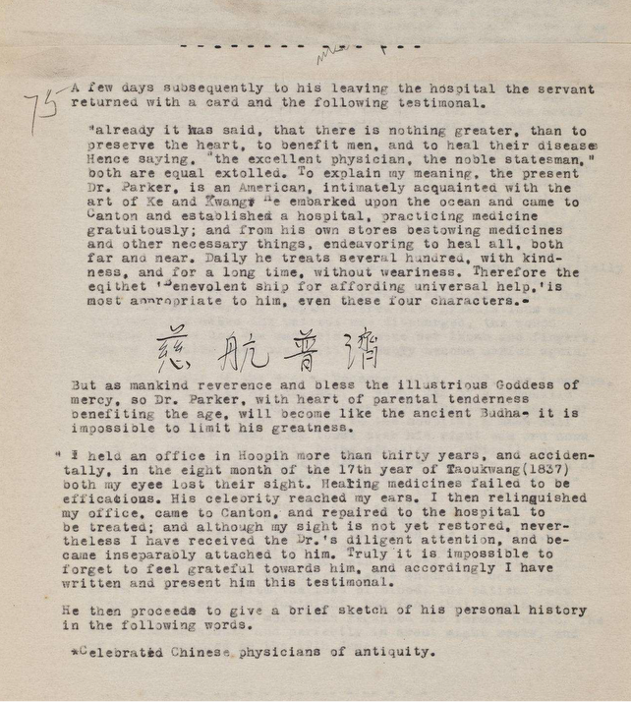
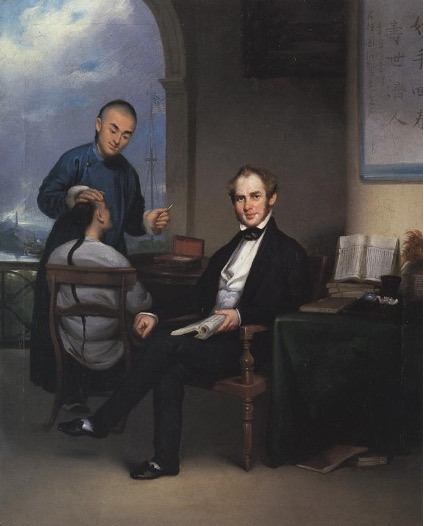
One chapter of the dissertation, for example, examines how physicians and patients established evidence of therapeutic efficacy in sight-restoring surgeries during the early nineteenth century. I found that while surgeons in Europe and the United States increasingly relied on statistical forms of evidence – such as certified registers documenting surgical outcomes (Figures 1a & 1b) – Western missionary physicians in China foregrounded individual patient testimonies (Figures 2a & 2b), a form of evidence that was increasingly marginalized in Western medical settings. By bringing together hospital records from multiple institutions, I demonstrate both the shared anxieties that eye physicians faced in defining successful treatment and the divergent strategies they developed for producing evidence across different contexts.
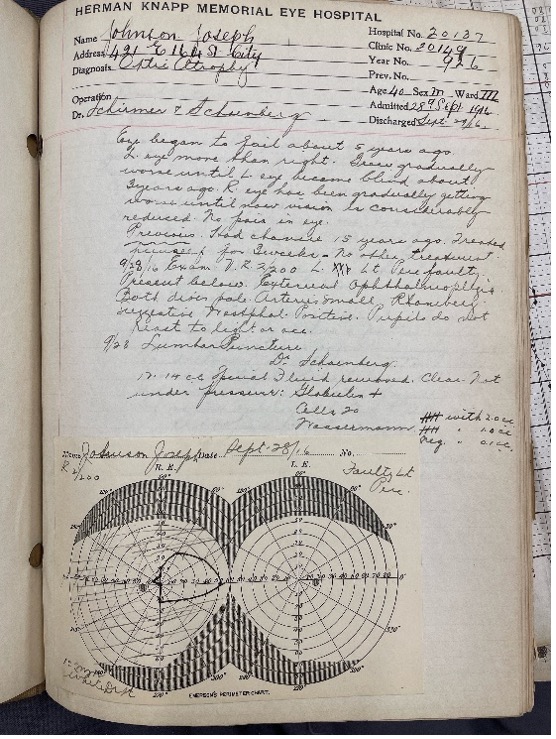
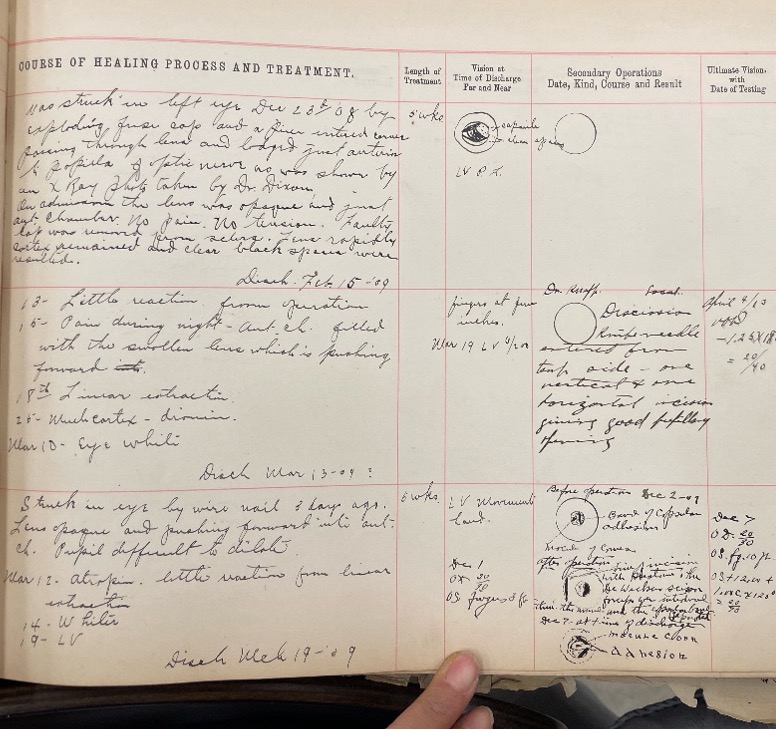
Second, the Consortium’s diverse source base, including physicians’ notebooks, patient records, legal documents, and policy materials, has enabled me to move beyond medical theories and rhetoric to examine how ocular experience was communicated in clinical encounters. I have cross-examined the patient records of ophthalmologist Howard Mellor (1865–1940) in Philadelphia (College of Physicians of Philadelphia), those of Herman Knapp (1832–1911) in New York City (Columbia University Health Sciences Library), and papers from the Department of Ophthalmology at Peking Union Medical College (1917– ) (Rockefeller Archive Center). Across these collections, I analyzed the various media that physicians used to describe illness experience, including direct quotations from patients, disease classifications, readings of diagnostic technologies, charts, graphs, and hand-drawn illustrations (Figure 3).
I then contrasted these physicians’ accounts with alternative sources, including legal proceedings, commercial advertisements, and policy documents, to uncover potential conflicts in clinical encounters. Placing these perspectives in conversation, I examine how physicians and patients differed in understanding ocular experience and how the terms of negotiation shifted over time. For example, one chapter investigates debates surrounding the retinoscope, a technology designed to assess vision independently of patient judgment. By comparing the perspectives of optometrists, ophthalmologists, vendors, patients, and legal experts in both China and the United States in the early twentieth century, I examine tensions between the objectivity promised by diagnostic technologies and the irreducible uncertainties of subjective experience. Through a series of medical, legal, and commercial disputes, the dissertation demonstrates how contested standards of diagnosis and treatment shaped evolving understandings of the body, transformations in clinical communication, and the establishment of epistemic and professional authority.
The breadth, diversity, and global reach of the Consortium member collections helped me to make two major interventions at the intersection of the history of medicine, disability studies, and bioethics. First, the dissertation rethinks the global rise of “scientific medicine.” Rather than interpreting its expansion solely as proof of Western superiority or as an instrument of imperial power, I ground the story in everyday clinical encounters revealed by a critical reading of the transpacific archives. By foregrounding patient experience – and the ways it was mediated – I show how medical authority was produced through translation and negotiation. Second, the project historicizes the formation of health care systems and bioethical traditions across cultures. Combining the history of medicine and disability media studies, it foregrounds a widening gap between the clarity promised by modern biomedicine and the fundamentally unruly nature of lived experience. I argue that advances in biomedical knowledge have not been matched by equally rich ways of experiential articulation, which has continued to shape the limits of clinical care today.