Yovanna Pineda is Associate Professor of History at University of Central Florida and a 2024-2025 Consortium Research Fellow.
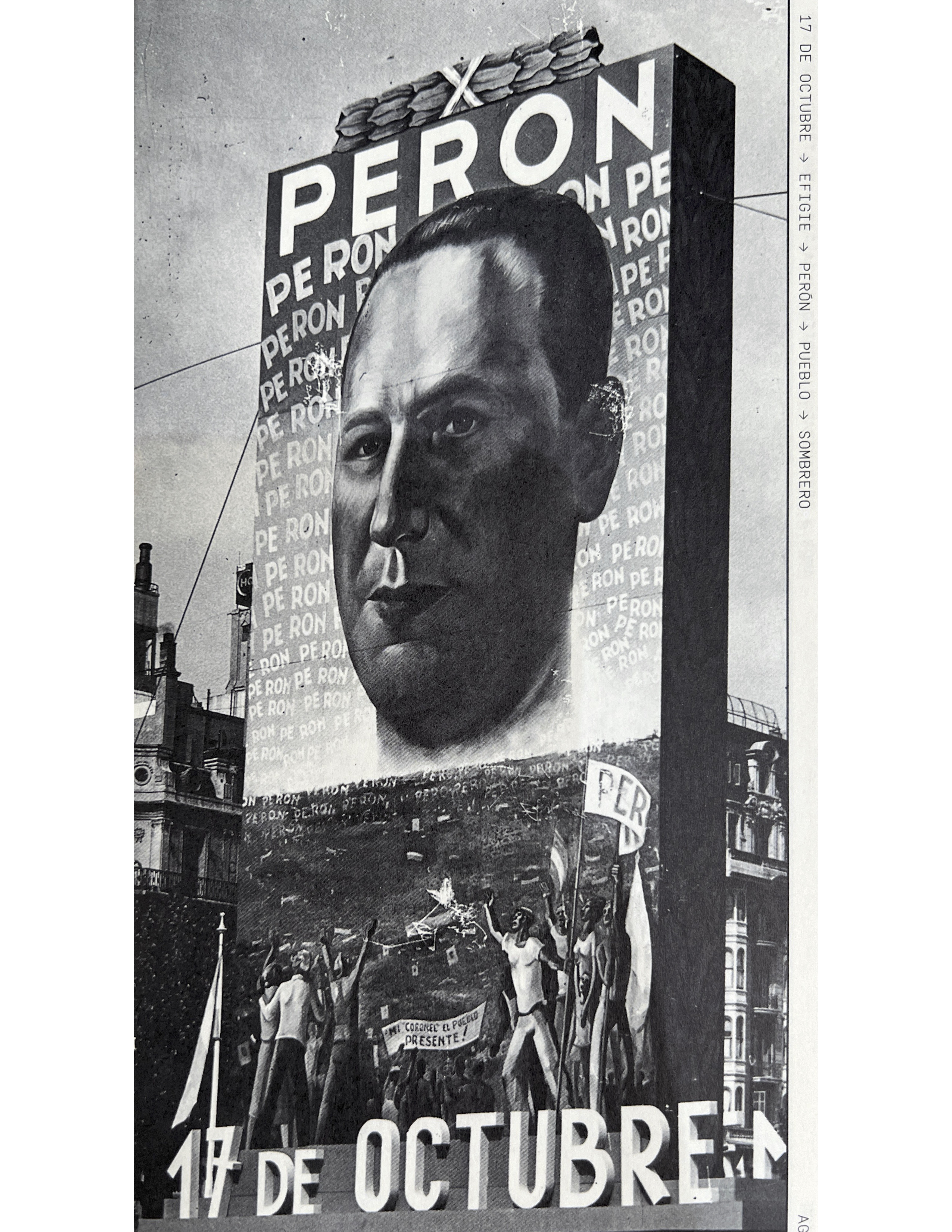
The Consortium’s support advanced my book project, “Specters of Peronism: Aesthetics of Labor and Technology in Twentieth-Century Argentina.” This project examines the visual aesthetics that shaped workers’ collective memory of the populist leader Juan Domingo Perón and his wife, Eva Duarte (Evita). My research traces Peronist political ideology from its association with material benefits to a collective memory evoking physical sensations and an aura of haunting, rooted in the principles of workers’ dignity, women’s rights, and child welfare. In particular, Perón’s visual legacy continues to shape perceptions, ensuring that notions of Peronism persist long after his three administrations. Drawing on Jacques Rancière’s The Politics of Aesthetics, which posits that aesthetics and politics are deeply intertwined, I argue that Peronism functioned as an aesthetic regime—organizing visual aesthetic and sensory experiences inseparable from political life, such as creating a special holiday to celebrate Peron’s return to politics in 1945 (Image 1. “October 17,” Museo Evita, Buenos Aires, Argentina).
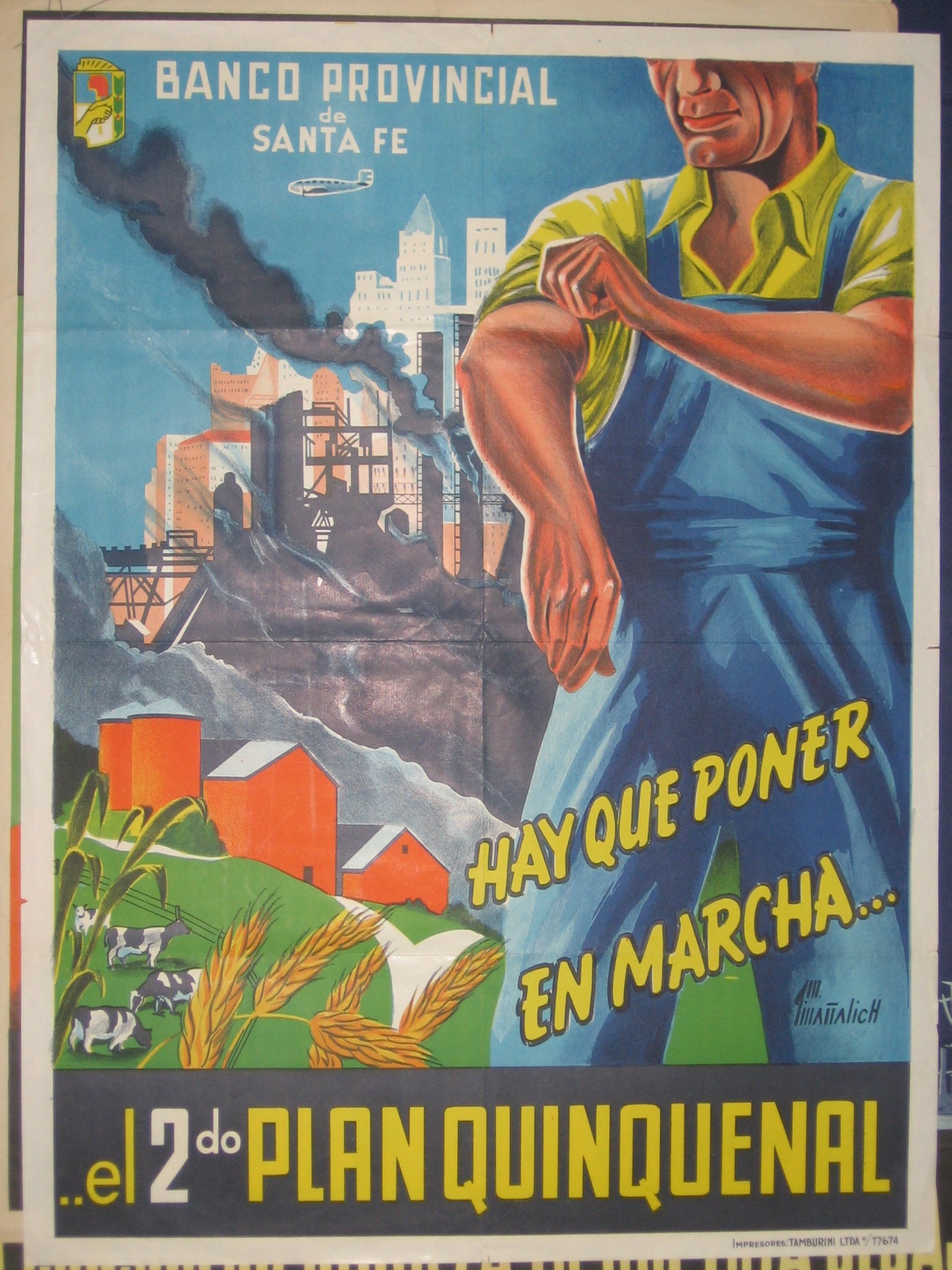
Applying Rancière’s notion of the “distribution of the sensible”—how a society organizes perception and who allocates the ability to speak and be heard—helps us understand Peronism as an aesthetic regime. Perón’s unique aesthetic was to craft the worker (typically male) with his tools and technology as an agent of progress and productivity (Image 2. Second 5-year Plan, Archivo General de la Nación, Buenos Aires, Argentina).
In Perón’s aesthetic regime, art did not merely serve politics or act as propaganda. Instead, artistic production across design, architecture, monuments, sound, and ephemera was strategically crafted to reshape sensory experience itself, creating new ways of seeing, hearing, and perceiving that challenged existing hierarchies and made visible what was previously invisible.
This project began with fieldwork at Argentine factories and the Southern Docks of Buenos Aires in fall 2023. Although Peronism—originating from Juan Domingo Perón—was not always explicitly mentioned in interviews, its influence surfaced in discussions about Presidents Mauricio Macri and Cristina Fernández de Kirchner, policy contexts, and factory histories. Perón served as president three times (1946-51, 1952-55, 1973-74) until his death in 1974. As I began researching this topic, my focus on the aesthetics of labor led me beyond dominant narratives of Peronist history and ideology. During fall 2023, in Argentina and over seven weeks in 2024, I conducted research in Buenos Aires, including at the specialized historical archive of Museo Evita (Lafinur 2988, Palermo). There, I found architectural plans, unique photographs, and film of Evita and her family, and recordings of interviews with working-class women who knew her or benefited from Perón’s policies. Although these sources were compelling, they did not fully explain Peronism’s enduring presence in collective memory. This led to my central research question: Why does Peronism still persist as a visual aesthetic and in collective memory today?
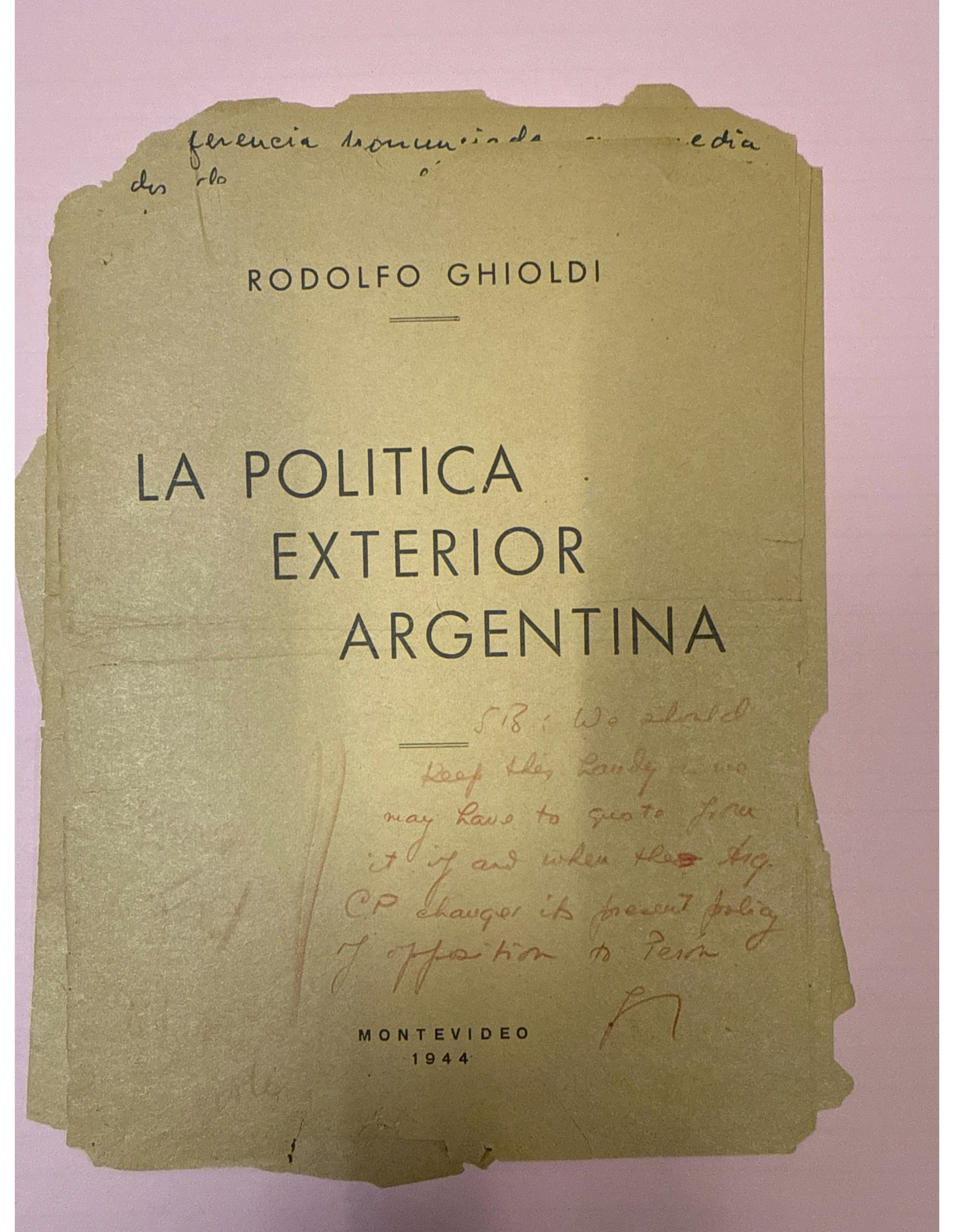
The Consortium’s research fellowship enabled me to explore this question by visiting three rare book and manuscript collections. Consortium funding for my research enabled me to conduct archival research at Rare Book and Manuscript Libraries at Caltech, Columbia, and Duke Universities in the 2024–25 academic year. I investigated historical narratives, both unpublished and published manuscripts, ephemera, photographs, and film footage, while also examining dissenting voices during periods of both benefit and repression throughout the eras of Perón's administration, import-substitution industrialization policies, military regimes, and the National Reorganization Process (roughly the 1940s to the 1980s). Archival materials at Caltech, Duke, and Columbia Universities document first-hand accounts from journalists, university professors, and ambassadors, who compiled interviews, newspaper clippings, pamphlets, visual materials, and ephemera—contributing to a more nuanced historical understanding of mid-twentieth-century Argentina (Image 3. Sample pamphlet, Pineda).
In each archive, I reviewed personal papers and manuscripts to help explain Peronism’s persistence—most notably, its consistent real or imagined pro-worker policies since 1946. Economist Carlos F. Díaz-Alejandro’s unpublished manuscripts at Columbia University provided quantitative evidence challenging the notion that Peronism caused Argentina’s economic instability, showing these issues began even before 1930, and worsened after that year. At Caltech, Enrico Volterra’s personal papers described professors’ efforts to help Argentina organize a new Institute of Stability in 1939 to stabilize the economy and reduce labor conflict. As is well documented, Argentina’s brief postwar growth during Perón’s first administration (1946–51) led to increased real wages for workers. His overthrow in 1955 and subsequent military interventions caused deep trauma and further harmed workers and their working conditions. Journalist Robert J. Cox’s papers at Duke University traced intensifying repression of workers under successive military governments (1950s-1970s), culminating in the Dirty War (1976–83). His collections—including pamphlets, clippings, photographs, and ephemera—also reflected the experiences of those fleeing repression and documented his family’s eventual exile to the United States in the 1970s. I uncovered much more in these archives, collecting thousands of pages that I captured with the TinyScanner app on my iPhone. This app organizes materials as photos or black-and-white text into PDF files, thereby expediting the post-archival organization process. Beyond scholarly interest, understanding the origins and endurance of aesthetic strategies of populist regimes may be significant for a broad academic audience.
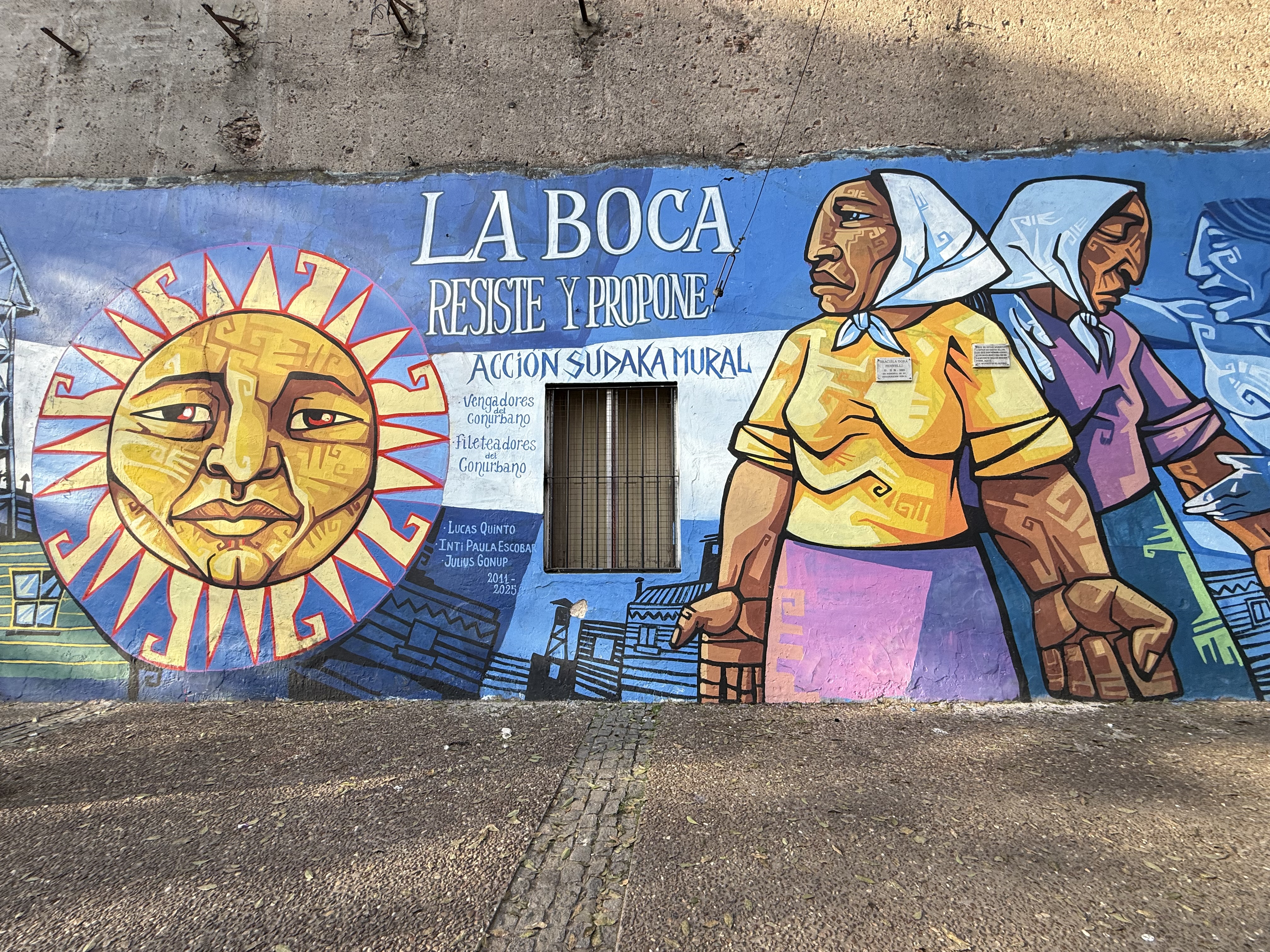
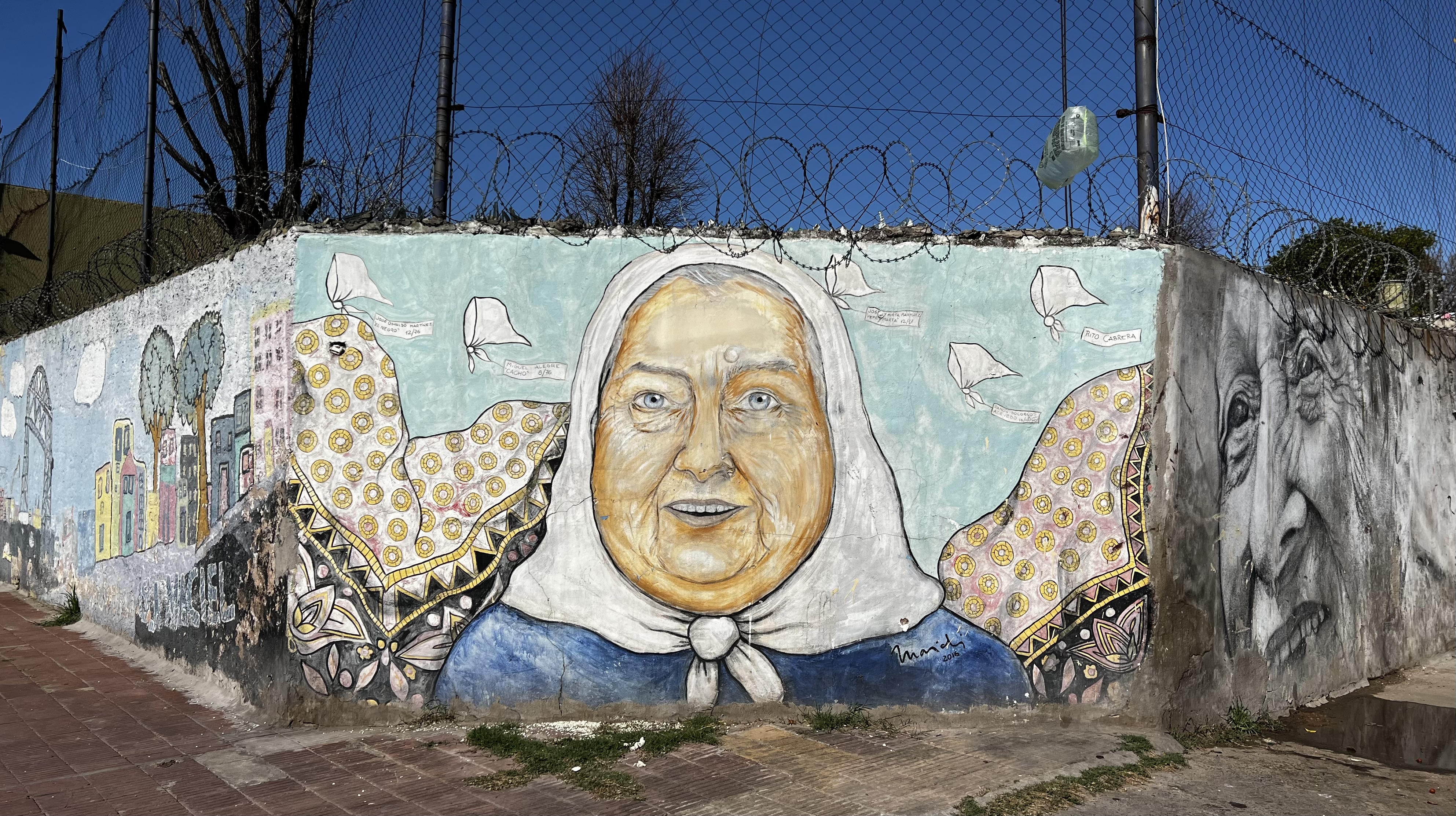
During my archival research in university collections, I realized that the voices of women and workers were missing. This inspired me to return to Argentina in summer 2025 to conduct fieldwork, consulting national, provincial, and municipal archive collections to uncover workers’ voices and perspectives. Through interviews with local residents of La Isla Maciel and La Boca, I found that when asked directly about Peronism, people often responded indirectly, referencing their environment: the smell of the polluted river, the oppressive summer heat, the winter cold, and recalling memories—either their own or a grandparent’s—of a politician, perhaps a Peronist, who brought blankets or provided trips to a local swimming pool. While in the field, I also studied the street art in La Boca and La Isla Maciel that honors local heroes like the firefighters, also commemorating heroes, such as the Madres (Image 4. Madres, La Boca, Pineda and Image 5. Madres, Isla Maciel, Pineda)—their march around the Plaza de Mayo continues by new generations, calling on the population to never forget the disappeared.
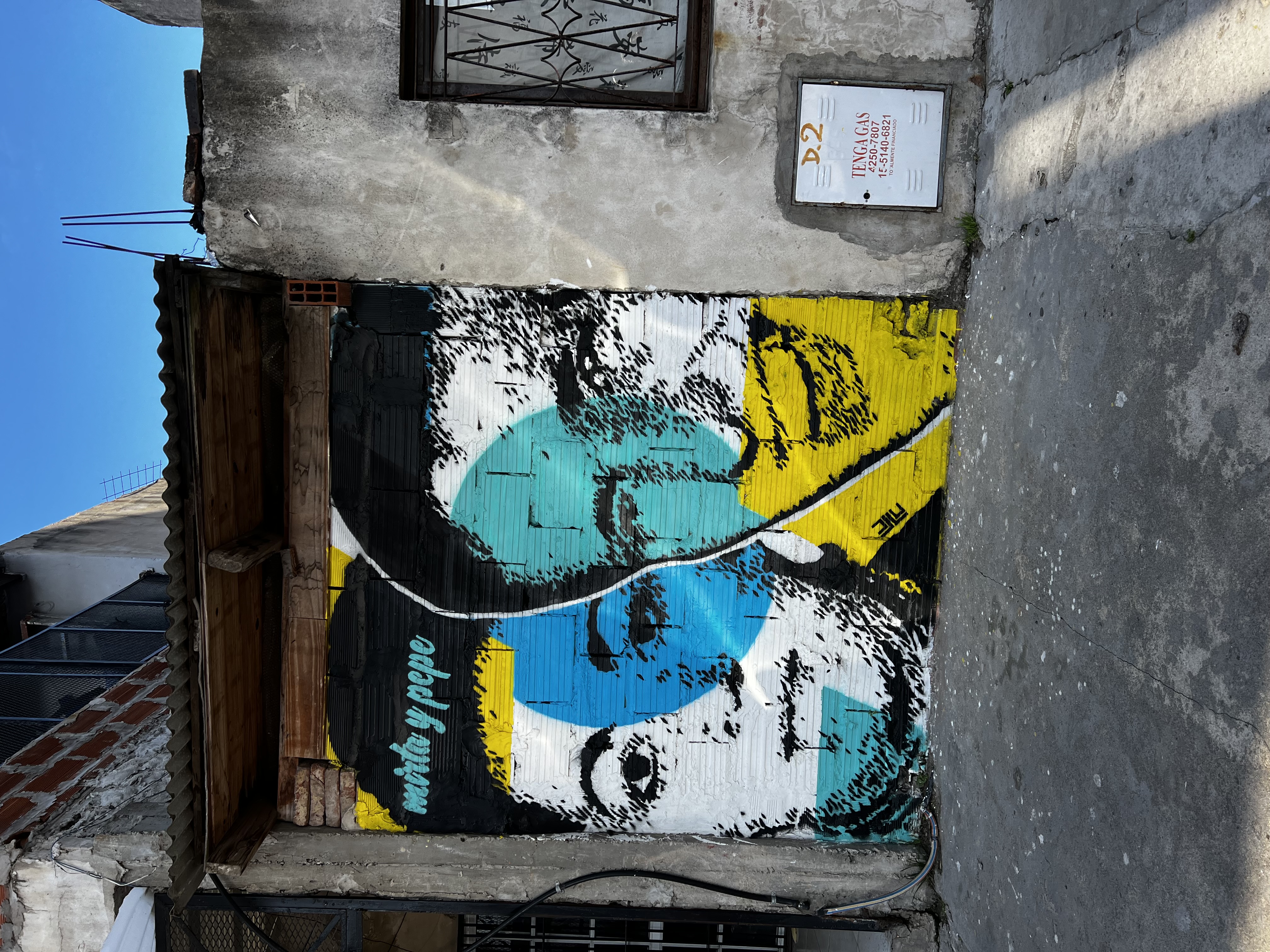
The Isla Maciel commemorates these stories through their growing Pintó la Isla Mural Art program, such as remembering a young couple who were murdered by the military regime (Image 6. Mirta y Pepe, Isla Maciel, Pineda).
In sum, the Consortium’s research fellowship is valuable in enabling scholars to access diverse archives at partner institutions in the US, the UK, and elsewhere to advance their projects. My archival research helped me focus on understanding political aesthetics from the perspectives of political leaders and workers. In 2026, I can focus on writing chapters, and I hope to find a publisher for this work by the end of next year.