Eric Herschthal
University of Pennsylvania
University of Pennsylvania
Claudia Cohen Hall 392
249 S 36th St, Philadelphia, PA 19104
Conventional narratives of human-induced climate change often begin with the Industrial Revolution. Around 1800, the story goes, coal-powered steam engines initiated a decisive shift away from organic energy sources—wood, animal power, and human muscle—and toward fossil fuels, driving an inexorable rise in global emissions. While scholars have critiqued this account for obscuring the roles of capitalism, slavery, and colonization, few have approached the problem using the metrics of climate science itself: did slave plantations significantly increase global emissions? Using a carbon-accounting method developed with climate scientists, and focusing on American slave plantations, this paper estimates emissions from land cleared for slave-based cotton production and compares them to emissions from land cleared for non-slave-based U.S. farms, as well as coal emissions in Britain and the United States. It finds that, between 1790 and 1860, slave-based cotton fields alone emitted more carbon than all the coal burned by Britain and the United States combined. By 1850, existing estimates show that the United States had become the world’s largest carbon emitter, responsible for one-third of global emissions, nearly all of it from agricultural land clearance. These new estimates suggest that slave-based cotton alone accounted for one-quarter of those emissions—more than any other U.S. crop, and far more than all industrial coal emissions. Ultimately, this paper argues that it was in the fields, not the factories, where the Industrial Revolution’s carbon impact was most keenly felt.
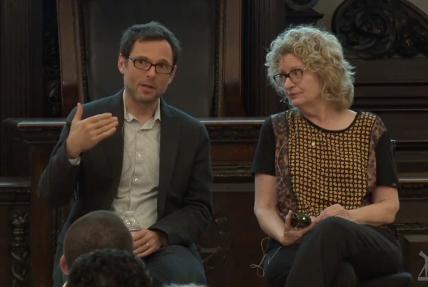
Eric Herschthal is an associate professor of history at the University of Utah. His first book, The Science of Abolition: How Slaveholders Became the Enemies of Progress (Yale University Press, 2021), explored how Black and white scientists and abolitionists used scientific ideas to cast slaveholders as enemies of modernity. He is currently working on a book about American slavery’s role in the origins of anthropogenic climate change, titled Carbon Conscripts: American Slavery and the Origins of Climate Change. His research has appeared in The William & Mary Quarterly, The Journal of the Early Republic, and Slavery & Abolition, among other journals, and has been supported by research fellowships from Harvard University’s Charles Warren Center, Yale University’s Gilder Lehrman Center, the New York Public Library’s Schomburg Center, The Huntington Library, and elsewhere. His writing has also appeared in mainstream outlets such as The New York Times, The New Republic, and The New York Review of Books. He received his Ph.D. from Columbia University and his B.A. from Princeton University.