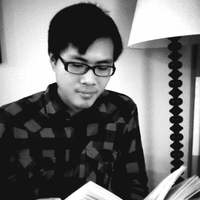
Leo Chu

Ph.D. Student, Department of History and Philosophy of Science, University of Cambridge

-
Research Fellow

Harvesting Diversity: Ecology, Agriculture, and the Remaking of Development, 1970-2010

The notion of diversity has become integral to the contemporary politics of sustainability and resilience. This research approaches the history of diversity through the confluence of agricultural development and ecological science in Southeast Asia and North America during the Cold War. I will utilize the collections of personal papers, project grants, and institutional records in the Rockefeller Archive Center, University of Wisconsin Madison, and Harvard University to elucidate the various programs the Asian Vegetable Research and Development Center (AVRDC) participated between 1970s and the early 2000s—from the quest to diversify the Green Revolution through vegetable breeding to the promotion of homegardens as ecologically-diverse production systems, from boosting social diversity in urban agriculture to conserving diverse seeds for disaster recovery. By analyzing the AVRDC’s network, this research highlights the complexities and contradictions in the diversity discourse, and explore critical ways to re-imagine food and nature in the age of Anthropocene.

Updates

Leo began a postdoc at the Institute of History, Academia Sinica. In addition to completing his dissertation, Leo has used his Consortium-funded research to publish: 

  • "With and against the grain: The Asian Vegetable Research and Development Center and modest narratives of Green Revolution in Taiwan, 1963–2002." Agricultural History 97, no. 3 (2023): 448-477; 
  • "'A bloodless social revolution': Land reform and multiple cropping in Cold War Taiwan, 1950–1979." Plants, People, Planet 6, no. 5 (2024): 1104-1110; 
  • "Boundaries and interdisciplinarity: the rise and fall of agroecosystem analysis in Southeast Asia." Agriculture and Human Values 43, no. 2 (2026): 75.
Image
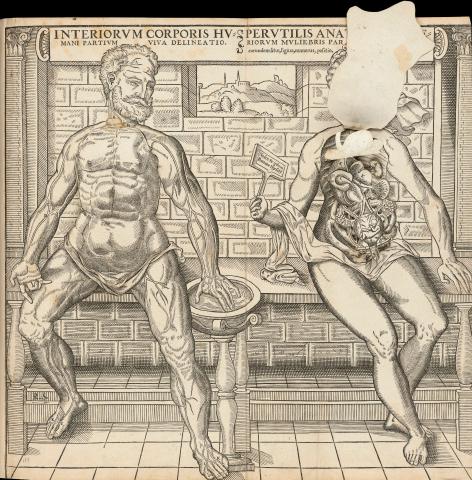
Viva delineatio

Thomas Geminus, Interiorum corporis humani partium viva delineatio, London ca. 1559.