Image
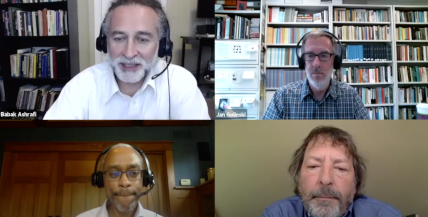
Babak Ashrafi, Jan Golinski, Keith Wailoo, and Tom Misa at the Presidents of AAHM, HSS, and SHOT event. Held online on September 14, 2020.

New York University
Groundwork: archaeology, development, and the making of the “cultural resource”
Since the 1960s, many governments and international lending institutions have required some form of environmental impact assessment for construction projects. This dissertation examines how postwar states also sought to mitigate development’s impacts by turning to the expertise of archaeologists. I trace how archaeological excavations became a part of development planning, and how this precipitated a shift of archaeological knowledge production from universities to private-sector environmental consultants. Drawing on archival collections at the Smithsonian, Princeton, and Harvard, I trace the evolution of development-related archaeology in the United States from the New Deal, to the “cultural resource management” model of the 1970s, to its international circulation through the World Bank. By situating archaeology within histories of technical expertise, environmental governance, and the privatization of scientific knowledge, this project both advances the history of science and technology and offers insight into attempts to regulate development in the second half of the twentieth century.
Babak Ashrafi, Jan Golinski, Keith Wailoo, and Tom Misa at the Presidents of AAHM, HSS, and SHOT event. Held online on September 14, 2020.
© 2026 Consortium for History of Science, Technology and Medicine | Copyright Infringement