Image
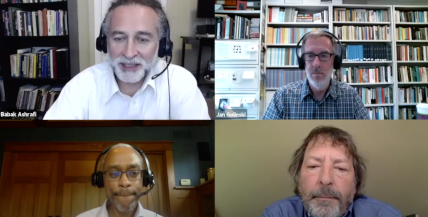
Babak Ashrafi, Jan Golinski, Keith Wailoo, and Tom Misa at the Presidents of AAHM, HSS, and SHOT event. Held online on September 14, 2020.
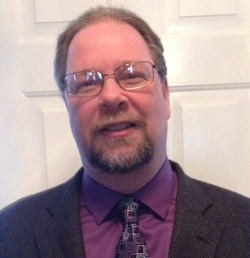
Ph.D. CandidateDepartment of HistoryUniversity of South Carolina
Coastal Identities: Science, Technology, Commerce, and the State in American Seaports, 1790 - 1860
As the most prominent American cities in the early republic, seaports were the loci for the intersection of science, the state, and commerce and the pivotal link in the development of each. Political leaders interested in the development of commerce established federal jurisdiction over coastal navigation through legislative acts and the appointment of scientific men such as Alexander Dallas Bache and George Gordon Meade to map the coast and improve port infrastructure. Scientific and technological experiments performed by these men at the state’s behest promoted commercial expansion through port safety and efficiency and the sale of their science as commercial objects. With the aide of the state and local commercial leaders, American seaports became scientific and technological laboratories at the forefront of producing knowledge in the fields of astronomy, climatology, communications, engineering, luminosity, oceanography, and surveying.
Babak Ashrafi, Jan Golinski, Keith Wailoo, and Tom Misa at the Presidents of AAHM, HSS, and SHOT event. Held online on September 14, 2020.
© 2026 Consortium for History of Science, Technology and Medicine | Copyright Infringement