2024-2025 Year in Review
 | 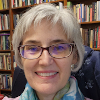 | 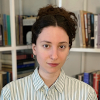 |
Research Fellows Matteo Bortolini (Padua), Kristy Bowers (Missouri), Emma Broder (Harvard) | ||
2024- 2025 saw the Consortium grow in membership; expand our collection of online resources for teaching, learning and research; sponsor a cohort of brilliant fellows; join with member institutions to hold a number of online events; host a vibrant program of working groups that draws an increasing number of scholars from around the world; and upgrade the website underpinning so much of our activity. During this time, the Consortium has continued to foster scholarship and collaboration across institutional boundaries, and provide the rich environment for study and free academic exchange for which it has become known. As we look ahead from the end of the year, we are exploring avenues to expand our international presence even further, as well as to extend our fellowship opportunities.
Here is a review of the Consortium's year in
Relationships with our members form the foundation of Consortium's cross-institutional scholarly environment. Our member institutions comprise the research setting for our fellows, who travel to their libraries and archives. Our website provides a single, unified search engine incorporating member resources. We host webcasts highlighting member collections. Readers of fellowship applications frequently suggest specific resources among our membership for further research. Additionally, the Consortium often partners with its members to host joint online events.
Two new member institutions joined the Consortium this year to help foster these connections. Membership now includes 38 cultural, educational and research institutions in the US, Canada, UK and Australia.
 The University of Pittsburgh Library System's holdings include over 7 million items in the circulating collection and around 100,000 special collections items comprised of incunabula, rare books, documents, maps, prints, and other media. The Archives and Special Collections department has particularly rich holdings in the history of twentieth-century philosophy of science, twentieth-century medicine, late-nineteenth century astronomy, and rare books in early-modern natural philosophy.
View more information on University of Pittsburgh's collections here.
 The UCSF Library is one of the preeminent health sciences libraries in the world, containing an expansive collection of the world’s health sciences knowledge base including over 600 reference databases, more than 96,000 journal and serial titles, and 1.2 million print and electronic books. The mission of the UCSF Library’s Archives and Special Collections is to identify, collect, organize, interpret, and maintain rare and unique material to support research and teaching of the health sciences and medical humanities and to preserve institutional memory.
UCSF Archives and Special Collections is a dynamic health sciences research center that contributes to innovative scholarship, actively engages users through educational activities, preserves past knowledge, and enables collaborative research experiences to address contemporary challenges. Holdings include significant collections relevant to the history of science, technology, and medicine, including rare books, archival materials, and special collections such as:
- extensive collections on the HIV/AIDS Epidemic
- the Arthur E. Guedel anesthesia collection, 1899-1998
- the UCSF Biotechnology Archives
- the Tobacco Control Archives
View more information on UCSF's collections here.
 |  |  |
Quantum Century working group convenors: Climério Paulo da Silva Neto (Bahia), Jinyan Liu (Beijing) and Alexander Blum (Berlin) | ||
The Consortium's online academic working groups generate active scholarly work, in publications as well as in productive, inter-disciplinary discussion and review. The Consortium hosted thirty-two working groups last year, in nearly three hundred meetings with an attendance of approximately four thousand researchers, teachers and students. Ninety conveners from North and South America, Europe, Africa and Taiwan organized and moderated the groups. In addition to discussing their works-in-progress and important publications, several groups worked on edited volumes. Do Less Harm: Ethical Questions for Health Historians was produce by the working group on Ethics and/in the History of Medicine and the Human Sciences, which took a rest in 2024-2025 before reconvening for their net project.
Working groups and their conveners:
- Rosanna Dent - Cambridge University
- Judy Kaplan - Science History Institute
- Paula Lopez - National Autonomous University of Mexico
- Matthew Watson - Mount Holyoke College
- Lisa Haushofer - University of Zurich
- Kirsten Moore-Sheeley - Cedars-Sinai Medical Center
- Marco Ramos - Yale University
- Carolyn Roberts -Yale University
- Katherine Arnold - University of Liverpool
- Nuala Caomhanach - New York University
- Deborah Dubald - University of Strasbourg
- Catarina Madruga - University of Lisbon
- Reed Gochberg - Concord Museum
- Adrianna Link - American Philosophical Society
- Jesse Smith - Science History Institute
- Janine Freeston - Sheffield Hallam University
- Hanin Hannouch - Weltmuseum Wien
- Kyoungjin Bae - Kenyon College
- Rachel Silberstein - Independent Scholar Affiliated with the University of Washington
- Yulian Wu - Michigan State University
- Yijun Wang - New York University
- Babak Ashrafi - Consortium for History of Science, Technology and Medicine
- Darin Hayton - Haverford College
- Tunahan Durmaz - European University Institute, Florence
- Nukhet Varlik - Rutgers University–Newark
- Barbara Hof - University of Lausanne
- Climério Paulo da Silva Neto - Federal University of Bahia
- Brian Leech - Augustana College
- Robert Lifset - University of Oklahoma
- Sarah Stanford-McIntyre - University of Colorado Boulder
- Ryan Hearty - Johns Hopkins University
- Ellan Spero - Massachusetts Institute of Technology
- William deJong-Lambert - Bronx Community College, CUNY
- Paula Habib - Federal University Fluminense
- Marcelo Lima Loreto - Columbia University
- Jason Chernesky - Johns Hopkins University
- Amy Hay - University of Texas Rio Grande Valley
- Melanie Kiechle - Virginia Tech
- Victoria Dickenson - McGill Library
- Ranee Om Prakash - Natural History Museum, London
- Anna Winterbottom - McGill University
- Guy Hetzroni - Open University of Israel
- Bernadette Lessel - Max Planck Institute for the History of Science
- Noah Stemeroff - University of Bristol
- Angélica Márquez-Osuna - Loyola University-Chicago
- Deirdre Moore - European University Institute
- Harriet Ritvo - Massachusetts Institute of Technology
- Raul Aranovich - UC Davis
- Kevin Chang - Academia Sinica in Taipei
- Judy Kaplan - Science History Institute
- Dave Park - Lake Forest College
- Jeff Pooley - Muhlenberg College
- Pete Simonson - University of Colorado Boulder
- Elma Brenner - Wellcome Collection
- Anna Dysert - McGill University
- Ross MacFarlane - Wellcome Collection
- Julia Nurse - Wellcome Collection
- Faith Wallis - McGill University
- Mary Yearl - McGill University
- Jack Hartnell - University of East Anglia
- Elaine Leong - University College London
- Max Bridge - Brown University
- Penelope Hardy - University of Wisconsin-La Crosse
- Daniella McCahey - Texas Tech University
- Jacques Aymeric-Nsangou - University of Yaoundé I
- Abidemi Babatunde Babalola - University of Cambridge
- Vera-Simone Schulz - Kunsthistorisches Institut in Florenz–Max-Planck-Institut
- Alexander Blum - Munich Center for Mathematical Philosophy
- Jinyan Liu - Chinese Academy of Sciences
- Climério Paulo da Silva Neto - Federal University of Bahia
- Arvid Ågren - Case Western Reserve University
- Stephen Weldon - University of Oklahoma
- Agnes Arnold-Forster - University of Edinburgh
- Jennifer Fraser - University of Toronto
- Karissa Patton - University of Edinburgh
- Whitney Wood - Vancouver Island University
- Lisa Brooks - University of Alberta
- Dagmar Wujastyk - University of Alberta
- Diana J. Montaño - Washington University in St. Louis
- David Pretel - University of Madrid
- José Ragas - Pontificia Universidad Católica de Chile
- Alex Aylward - Oxford University
- Joseph Martin - Durham University
- Michelle Pfeffer - Magdalen College, Oxford
- Jennifer Alexander - University of Minnesota
- Benjamin Gross - University of Texas at Austin
- Leah Malamut - University of Minnesota-Twin Cities
- Samantha Muka - Stevens Institute of Technology
- MaryKate Wolken - University of Minnesota
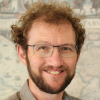 | 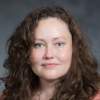 | 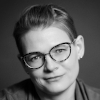 |
Emanuel Fellow Allistair Sponsel, Research Fellow Samm Newton, and NEH Postdoctoral Fellow Sam Muka | ||
Fellowship awards in 2024-2025 included one Emanuel Fellowship for independent scholars, two NEH Fellowships to postdoctoral scholars, and 23 Research Fellowships for research in Consortium members' libraries, archives and museums. These fellows made 100 research trips to the collections for research. These fellowship programs are an efficient and effective collaboration for both the member institutions and researchers to discover and access rare books, manuscripts and artifacts – and to foster a vibrant global scholarly community.
Alistair Sponsel, Independent Scholar
Documenting traditional knowledge of coral reefs in the Society Islands and the Tuamotu Archipelago
Lydia Crafts
Manhattan College
“Little Empire”: Medicine, Public Health and Human Experimentation in 20th Century Central America
Samantha Muka
Stevens Institute of Technology
Conservation and Marine Pollution in the New York Bight, 1960-present
Matteo Bortolini
University of Padova, Italy
The Effective Look of Things: A Two-Tier Biography of Clifford Geertz
Research Spotlight
Kristy Bowers
University of Missouri
Ordinary or Dangerous Pestilence? Defining New Diseases in Early Modern Spain
Emma Broder
Harvard University
The Anatomy of the Epidemic: Contested Illness in Twentieth Century America
Research Spotlight
Tad Brown
University of Cambridge
Fats from Seed: Chemistry, Peanut Breeding, and Food Science
Charles Davidson
University of Florida
Battlefields of Mind and Matter: Psychological Warfare and the Cold War Struggle for the Body, Mind, and Soul in Guatemala
Anna Doel
Independent Scholar
Friends in Odd Places: U.S.-Soviet Scientific Contacts during the Cold War
Salem Elzway
University of Southern California, Society of Fellows in the Humanities
Race Against the Robots: Artificial Intelligence and Inequality in Postwar America
Alfredo Escudero
Florida International University
The Land is the Laboratory: Indigenous Labor, Land Inspections and the Engineering of the Colonial Andes
Research Report
Sam Franz
University of Pennsylvania
From Computing Centers to Computer Science: The Political Economy of US Universities and the Rise of Computing, 1930-1990
Adriana Fraser
University of Pennsylvania
Making Danger: biological weapons research, biosafety, and the management of microbial life, 1940-1990
Cory Gatrall
Elaine Marieb College of Nursing at UMass Amherst
Race, Racism, and Reproduction in Public Health Nursing, 1900-1940
Robert Hancock
University of Victoria
Indigenous Anthropologists and the Emergence of Native American and Indigenous Studies in the 1960s and 1970s
William Krause
Vanderbilt University
"Scientific Genius: A Cultural and Intellectual History of the Idea in Modern America, 1880-1990"
Jingwen Li
Princeton University
A Phantom History of Phantom Ocular Impairment (1830-1930)
Jonathan MacDonald
Brown University
Expert Advice: Mediating Social Science’s Public Aspirations, 1930-1965
Elizabeth Maher
University of Illinois at Chicago
Building Mechanical Boys: What Autism History Tells us about Constructions of Race, Disability, Gender and Class in the Mid-20th Century United States
Samm Newton
University of Wisconsin-Madison
2024 - 2025 Keith S. Thomson Research Fellow
Expert Enclosure
Nidia Olvera Hernandez
Radboud University
Traditional Uses of Mexican Psychoactive Plants. From the Creation of a National Pharmacopeia to Ethnographical Collections 1900-1957
Yovanna Pineda
University of Central Florida
Spectacular Bodies: Aesthetics of Labor & Technology in Argentina, 20th Century
Magnus Schaefer
McGill University
The Early Digital: From Statistical Prediction to Digital Signal Processing, 1951–1969
Tanya Sheehan
Colby College
2024 - 2025 Albert M. Greenfield Research Fellow
After Harlem Hospital: Modern Medicine and African American Art
Research Spotlight
Jeannie Shinozuka
Washington State University
Model Minority Intelligence: Race, Education, & Citizenship, 1910-1965
Katherine White
University of California, San Diego Department of History, Science Studies Program
Anatomy and the Search for Natural Man
The Consortium's podcast series features some of the work produced in our community. These podcasts include discussions of current fellows' projects, the books of past fellows and other colleagues, as well as several ongoing topical series.
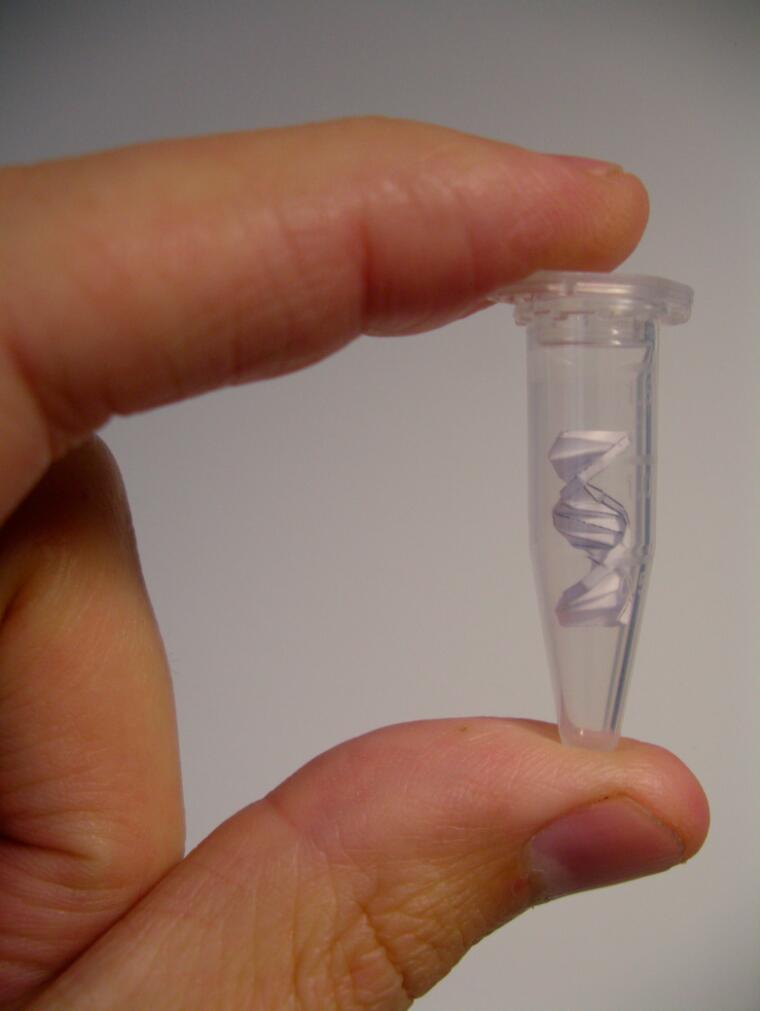
The DNA Papers: examining the history of seminal discoveries and research through which we learned about DNA.
DNA Papers #15 A conversation with Matthew Meselson and Franklin Stahl
History of Science Society at 100: Discussing the Society's past, present and future
History of Science Society at 100 - #6 on songs in the history of science
History of Science Society at 100 - #7 on mining in the history and sociology of science
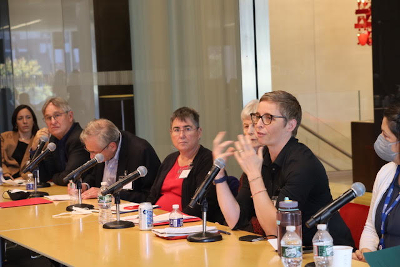
Celebrating 50+2 years of Scholarship: Department of the History and Sociology of Science
Episode - #1 Plenary Presentations: Past, Present, Future
Episode - #2 A Conversation with Department Founder and Science History Institute Founder Arnold Thackray
Episode - #3 History of Science: The State of the Field
Episode - #4 History of Technology: The State of the Field
Episode - #5 History of Medicine: The State of the Field
History of Medicine Week with the AAHM: Broader Audiences, Meaningful Engagement
Episode - #1 Connecting through Literature, Corporate Media, and the Museum
Episode - #2 Beyond the Annual Meeting & History in Therapeutic Spaces
Episode - #3 The Joys and Perils of Relevant History
Episode - #4 Conversation with Elena Conis – Author of How to Sell a Poison, 2024 Welch Award Recipient
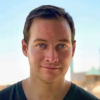 | 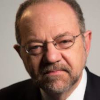 | |
Benjamin Breen and Jonathan Moreno on the history of psychedelic drugs in America | ||
Psychedelics in America
On December 10, 2024, the Consortium hosted a webinar on the history of psychedelic drugs in America. Benjamin Breen (Consortium Fellow 2011-2012) and Jonathan Moreno spoke on the resurgence of interest in psychedelics in the medical world as possible treatments for conditions such as depression, anxiety, and PTSD. This resurgence comes after a period during which psychedelic drugs were thought to be dangerous and have no medical value. Breen and Moreno reflected on how mainstream institutions take yet another look, including the changing legal, medical and cultural perspectives on psychedelic drugs. Breen's award winning book, Tripping on Utopia: Margaret Mead, The Cold War and the Troubled Birth of Psychedelic Science was published by Hachette in 2024.