The 2025-2026 year has been another vibrant one for the Consortium and the researchers, teachers and students in our community. We expanded opportunities for research and collaboration through our fellowship program, online working groups, and partnerships with member institutions. Scholars from around the world made use of member collections, participated in Consortium programs, and contributed to an increasingly international community of scholars in the history of science, technology and medicine. Read more below to learn about our work over the past year.
- Member Institutions: Carnegie Mellon University Joined the Consortium
- Online Working Groups: The Consortium hosted 31 online working groups last year, bringing together scholars from around the world for nearly 300 meetings attended by more than 4,000 participants.
- Fellowships: Through awards supporting 91 research trips to member institutions, the Consortium's 2025–2026 Emanuel Fellow and 28 Research Fellows represent an international cohort from universities across the United States, Brazil, Mexico, Japan, England, and Scotland.
- Research Reports: Consortium Fellows from recent years share brief reflections on their fellowship experiences and their use of member institutions’ collections.
- Podcasts: The Consortium's podcast series showcases the work produced by our community.
Carnegie Mellon University joined the Consortium, bringing its outstanding collections and scholarly community to our network. Carnegie Mellon University Libraries’ holdings include approximately 35,000 rare books; more than 50 mechanical computational devices and cryptographic machines; early AI art; papers and archival collections of Carnegie Mellon faculty, researchers and alumni. The library also holds one of the foremost collections of rare books and works on plant science and historical botany.
View more information on Carnegie Mellon University's collections here.
See information about all our member institutions here.
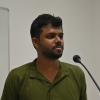
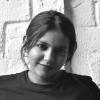
The Consortium hosted 31 online working groups last year, bringing together scholars from around the world for nearly 300 meetings attended by more than 4,000 participants. New groups explored topics including the intersections of contagion and culture, the role of mining and extraction in society, pharmacy, beauty, and health from the early modern period to the present, and new approaches to the history of astronomy. Working group participants published books and articles, presented research, organized panels, and produced other work emerging from these discussions, including a special issue of PhotoResearcher produced by the History of Color Photography Working Group. These scholarly communities are made possible by the dedication of more than 100 volunteer conveners, who create engaging forums for collaboration and intellectual exchange. The Consortium’s international community is reflected in groups such as Contagion, Culture & the Global South, where conveners based in India (pictured) foster discussion of how contagion intersects with indigenous cultures and communities around the world. Working groups and their conveners:
Contagion, Culture & the Global South
Plants in Africa and the Global South: Multi-Species Materialities, Ecologies, and Aesthetics (MMEA)
| 


|
Through awards supporting 91 research trips to member institutions, the Consortium's 2025–2026 Emanuel Fellow and 28 Research Fellows represent an international cohort from universities across the United States, Brazil, Mexico, Japan, England, and Scotland. Their projects span broad historical and geographical landscapes, from the global trade of early modern medicine to twenty-first-century computing. This year also marked the return of Dissertation Fellowships, expanding opportunities for emerging scholars. These fellowships will be offered in the next application cycle, opening soon. Independent Scholar Ruins of Modernity: Egyptian archaeologists, implicated subjects, and the un-making of Nubia (1902-1964) Albert M. Greenfield Research Fellow Hafeeza Anchrum Keith S. Thomson Research Fellow Samantha Wagner New York University Ancient Bones and Modern Science: Fossil Collecting in the Nineteenth-Century United States Research Fellows Richard Barney University at Albany, SUNY The Afterlife of Alchemy in the British Enlightenment Clare Byers Independent Scholar Forgotten Journeys: The French Bestsellers That Shaped American Exploration Nancy Campbell Rensselaer Polytechnic Institute Susquehanna Steam: A Parochial Energy History of a Northeastern Pennsylvania Nuclear Power Plant Olivia Casey Rutgers University Unsettling Quantification: Social Science and the Promise of Girls' Education Emma Day University College London Beyond Procreation: A New History of Reproductive Justice in the United States Caroline Douglas The Glasgow School of Art Locating Cloths of Gold and Silver Stuff: Women and Early Photography Tegan Flowers University of Virginia Care of Trans Families: 1960 – 2015 Alexey Golubev University of Houston Knowledge Propaganda: Soviet Socialism as an Epistemic Project Nathalia Gomes Institute of International Relations, University of São Paulo/Brazil Cold War, Public Health and Brazil: exploring transnational networks of knowledge (1955-1978) Zachary Griffen New York University How Management Made Medicine: The Evolution of 'Quality Improvement' from Industrial Production to Medical AI Reynolds Hahamovitch University of Michigan The Space Age: Horizons of the Future in the Cold War United States Yooseong Heo Duke University Rationalizing Socialism: Management, Information, and Technocracy in East Germany, 1953-1990 Jessica Hester Johns Hopkins University "From the burying ground down town": Grave Robbing, Racial Politics, and Freedom Work in the Nineteenth-Century U.S. Duim Huh University of Tokyo Cold War Science Diplomacy and the Transnational Development of Secondary Science Education in Japan during the 1960s Hallie Knipp Clemson University Reforming Bodies: Conflicting Ideologies in Women-Led Healthcare in Kentucky, 1915–1945 Pei Hsu Lin Washington University in St. Louis Science from the Margins: The Making of Sardine Oil as Vernacular Technology in Colonial Korea, 1920-1945 Priyamvada Nambrath University of Pennsylvania Triangulating Pedagogy, Patronage and Innovation in the Kerala School of Mathematics Francis Newman Harvard University Weathering Disease: Dangerous environments, qi, and contested bodily knowledge at China’s Tropical Frontier Jos Alberto Nochebuena National Autonomous University of Mexico Engineering Modernity Across Borders: Cambridge Soil Mechanics and the Deep Drainage System that Made Modern Mexico City Possible Sarah Pearlman Shapiro Brown University Women's Communities of Care in Revolutionary New England Christy Sher Ohio State University Visualizing the Body in Edo-Period Japan: Shunga and Anatomical Illustrations John Sullivan Northwestern University Fractious Knowledge: Earthquakes and Engineering in Eighteenth-Century Italy and the Spanish Atlantic Claire Votava University of California, Los Angeles Contesting Science and Technology: The British Radical Science Movement, 1968–1990 Caroline Wechsler University of Pennsylvania Flexible Care: Genetics, identity, and Connective Tissue Disorders Zhongxian Xiao Georgia Institute of Technology Being an Oil-Poor Nation: Petroleum and Techno-Politics in Modern China (1910s-1960s) Audrey Ke Zhao University of California, Santa Cruz From Frontier Herb to Global Medicine: American Ginseng and the Shaping of Early Modern Pharmaco-Geography,1644-1830 | 
Emanuel Fellow 
Albert M. Greenfield Research Fellow 
Keith S. Thomson Research Fellow |
Consortium Fellows from recent years share brief reflections on their fellowship experiences and their use of member institutions’ collections. Click through to learn more about their work.
Friends in Odd Places: U.S.-Soviet Scientific Contacts during the Cold War
Anna Doel, 2024 - 2025 Research Fellow
Making Danger: Biological Weapons Research, Biosafety, and the Management of Microbial Life, 1940-1990
Adriana Fraser, 2024 - 2025 Research Fellow
From Computing Centers to Computer Science: The Political Economy of US Universities and the Rise of Computing, 1930-1990
Sam Franz, 2024 - 2025 Research Fellow
Ameliorating Fatigue at Work: Workplace-Management, Mind-Body Medicine, and Self-Help for Industrial Fatigue in the U.S., 1900-1950
Jiemin Tina Wei, 2023 - 2024 Research Fellow
Wounded Sovereignty: Hidden Human Experimentation and Revolution in Guatemala
Lydia Crafts, 2024 - 2025 NEH Postdoctoral Fellow
Traditional Uses of Mexican Psychoactive Plants: From the Creation of a National Pharmacopeia to Ethnographical Collections 1900-1957
Nidia Olvera Hernández, 2024 - 2025 Research Fellow
From Physical Vibration to Statistical Correlation: Oil Prospecting, Cold War Seismology, and the Emergence of Digital Signal Processing
Magnus Schaefer, 2024 - 2025 Research Fellow
Model Minority Intelligence: Scientific Racism, Education, & Citizenship, 1910-1965
Jeannie Shinozuka, 2024 - 2025 Research Fellow
Fats from Seed: Chemistry, Peanut Breeding, and Food Science
Tad Brown, 2024 - 2025 Research Fellow
Ordinary or Dangerous Pestilence? Defining New Diseases in Early Modern Spain
Kristy Wilson Bowers, 2024 - 2025 Research Fellow
Specters of Peronism: Aesthetics of Labor and Technology in Twentieth-Century Argentina
Yovana Pineda, 2024 - 2025 Research Fellow
Indigenous Anthropologists and the Emergence of American Indian Studies in the 1960s and 1970s
Robert Hancock, 2024 - 2025 Research Fellow
Medicine, Anatomy, and the Search for Natural Man in the Sixteenth-Century Iberian World
Katherine White, 2024 - 2025 Research Fellow
Conservation and Marine Pollution in the New York Bight, 1960-present
Samantha Muka, 2024 - 2025 NEH Postdoctoral Fellow
Knowledge Propaganda: Soviet Socialism as an Epistemic Project
Alexey Golubev, 2025 - 2026 Research Fellow
Cold War, Public Health, and Brazil: Exploring Transnational Networks of Knowledge (1955-1978)
Nathalia Gomes, 2025 - 2026 Research Fellow
Building Mechanical Boys: A Raced and Gendered History of Autism in the 20th Century United States
Elizabeth Maher, 2024 - 2025 Research Fellow
American Genius: A History of the Idea in the Modern United States
William Krause, 2024 - 2025 Research Fellow
Unsettling Quantification: Social Science and the Promise of Girls' Education
Olivia Casey, 2025 - 2026 Research Fellow
The Consortium's podcast series showcases the work produced by our community. Episodes feature current fellows discussing their research, past fellows and colleagues reflecting on their published books, thematic series on key topics, and collaborations with partner organizations.
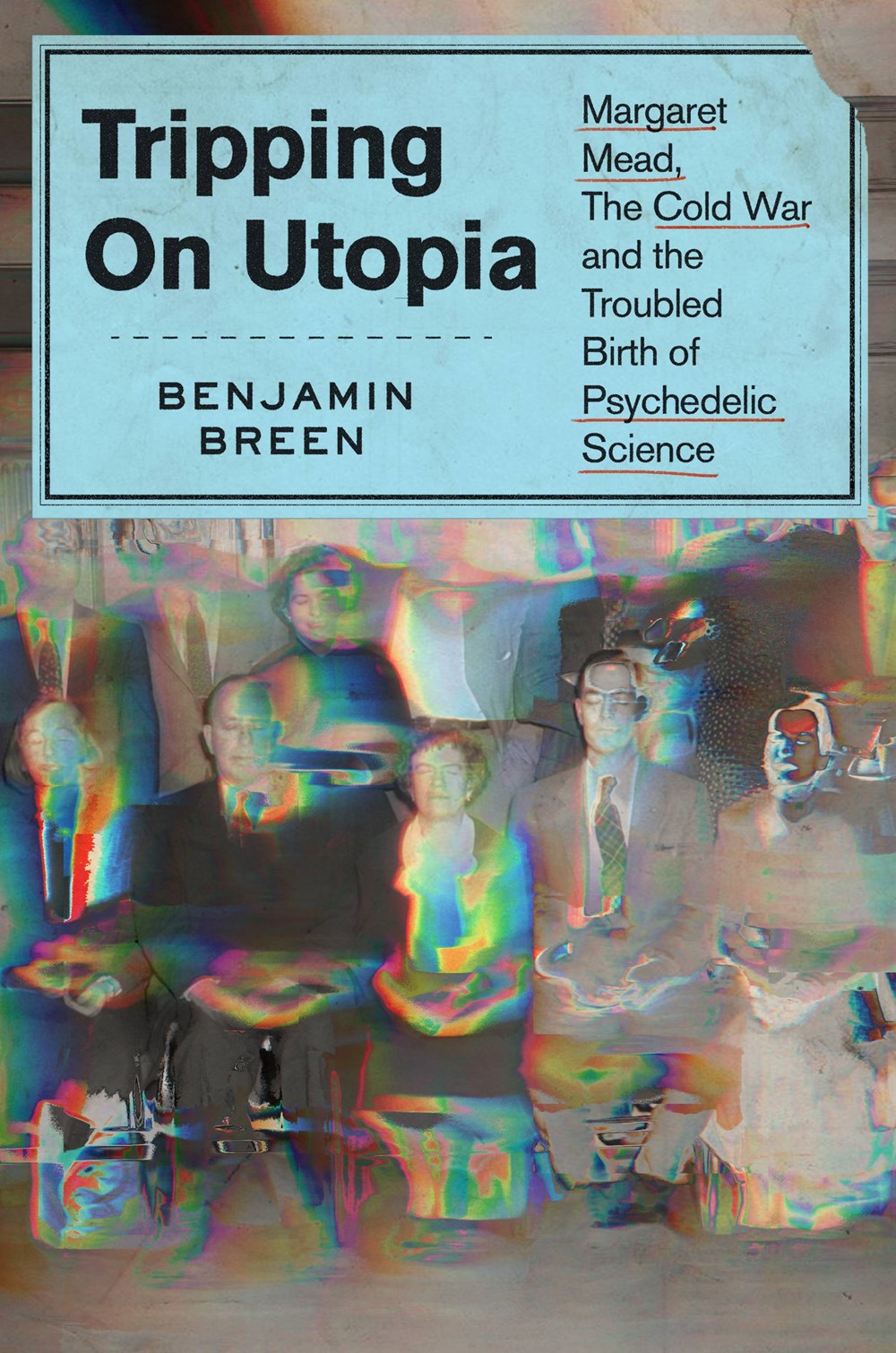
Benjamin Breen and Jonathan Moreno discuss the history of psychedelic drugs in the United States.
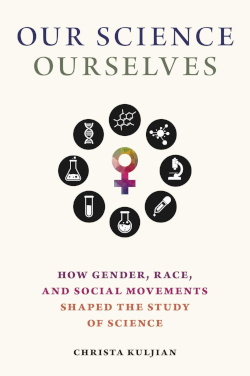
Christa Kuljian discusses gender, race, and social movements in the history of science.
Early Career Scholars Podcasts
Introduction to Writing Good & Fair Book Reviews
Best Practice in Oral History Interviewing and Analysis
Roundtable Discussion on Journals as a Means of Shaping the Production & Dissemination of Knowledge
Career Diversity
Roundtable Discussion on Collaborative Research & Writing
Content and Submission of Book Proposals
Grant Writing Master Class
Perspectives from the History of Medicine
Federal Regulations: Progressive Era and Beyond
Medicine Crossing Borders: Immigration and Health
Trans and Intersex Health from Past to Future